

Belt Conveyor Design Considerations for Mining and Bulk Material Applications
Mining operations run on tight margins. Every hour of downtime costs money. Every spillage event costs material. Every wrong design choice costs both.Belt conveyors are the backbone of any mining or bulk material handling operation. They move ore, coal, aggregates, and minerals from the pit to the plant, day after day, in conditions that would break lesser equipment. But a conveyor is only as good as its design.
Get the design wrong, and you get belt mistracking, premature wear, spillage, and unplanned shutdowns. Get it right, and you get decades of reliable, low-maintenance material transport. So, what actually goes into designing a belt conveyor system that can handle the punishment of mining environments? Let’s break it down.
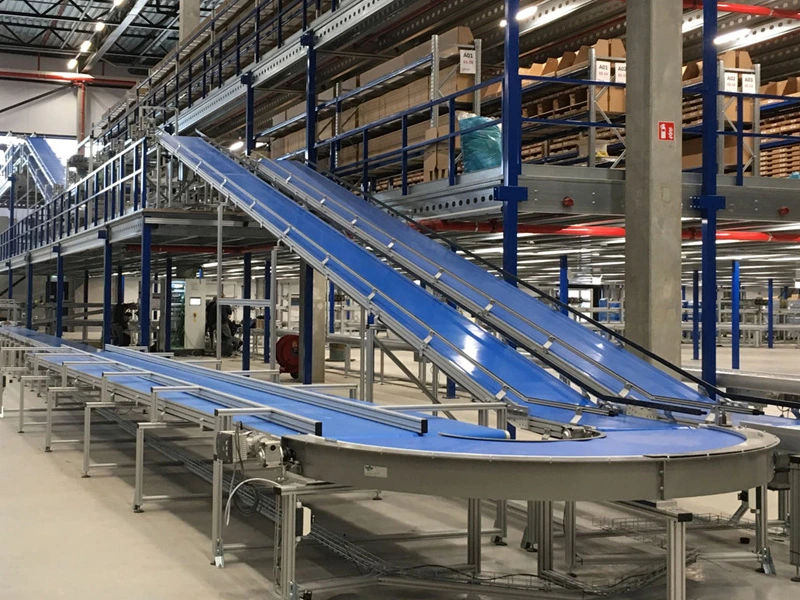
Why Belt Conveyor Design Matters in Mining Applications?
A mining conveyor isn’t a simple belt loop. It’s a heavy duty bulk material handling system built to move massive tonnages continuously, often over long distances, through open pits, underground tunnels, and processing plants. Design mistakes at the planning stage don’t show up on day one. They show up six months later, as belt sag, idler failure, or a tripper that can’t handle the load. By then, fixing the problem costs far more than getting it right the first time.
So, the design phase is where the real engineering work happens. Every variable, from belt width to incline angle, has to be calculated against the material properties, the throughput target, and the site conditions. Mining operations also run on continuous duty cycles. Unlike a factory conveyor that might run in shifts, a mining conveyor is often expected to operate 24 hours a day, seven days a week, with planned maintenance windows being the only real downtime. That level of duty demands a different design philosophy altogether. Every component, from the smallest idler bearing to the largest drive motor, has to be selected for endurance, not just for capacity on paper.
This is also why belt conveyor design in mining can’t be treated as a catalogue purchase. A standard industrial conveyor built for a warehouse or a packaging line simply won’t survive the abrasive, high tonnage, high impact environment of a mine. So, the engineering has to start from the ground up: the geology of the site, the chemistry of the material, and the realistic operating conditions the conveyor will face for the next 15 to 20 years.
Key Belt Conveyor Design Considerations for Mining and Bulk Material Handling
1. Material Characteristics Drive the Belt Conveyor Design
Before any conveyor is designed, the material it will carry needs to be understood in detail.
- Bulk density of the ore, coal, or mineral
- Particle size and lump distribution
- Moisture content
- Abrasiveness and corrosiveness
- Temperature of the material at loading
Ore behaves differently from coal. Coal behaves differently from bauxite. So, a belt conveyor system designed for one material rarely performs well for another without adjustments to belt specification, idler spacing, and trough angle. Bulk density, for instance, directly affects how much volume a given belt width can carry. A material with high bulk density needs a narrower belt to move the same tonnage as a lighter, bulkier material. Get this wrong, and you either oversize the system unnecessarily or undersize it and choke throughput.
Particle size matters just as much. Large lumps of ore need wider troughs and more generous belt edge clearance to prevent spillage, while fine material like coal dust needs tighter sealing and dust suppression built into the design. Moisture content changes how material flows on the belt. Wet ore tends to stick to idlers and pulleys, leading to carryback and buildup that eventually throws the belt out of alignment.
Abrasiveness is another factor that’s easy to underestimate at the design stage. Highly abrasive minerals wear down belt covers and pulley lagging far faster than gentler materials, so belt cover thickness and rubber compound selection have to be matched to the specific ore or mineral being handled. Corrosive materials, on the other hand, demand different considerations entirely, pushing the design toward corrosion resistant structural components and protective coatings on exposed metal parts.
2. Belt Width and Speed Calculations
Belt width and belt speed together determine how much material a conveyor can move per hour. Getting this calculation right avoids two expensive mistakes: an undersized belt that chokes throughput, or an oversized belt that wastes capital.
- Factors that go into this calculation include:
- Required throughput in tonnes per hour
- Trough angle, typically 35 degrees for high capacity load
- Material bulk density
- Surcharge angle of the material on the belt
Methods India designs mining conveyors with adjustable inclines and variable speeds, so the system can be tuned to actual site throughput rather than a generic estimate. There’s also a balancing act between belt speed and material degradation. Running a belt too fast can cause material to bounce and spill at transfer points, and it can accelerate wear on friable materials like coal, which breaks down into fines when handled roughly. Running it too slow means a wider, more expensive belt is needed to hit the same throughput target.
So, experienced designers typically model several belt width and speed combinations before finalizing one, weighing capital cost against operating cost, maintenance load, and the specific handling sensitivity of the material. This is where site data, not textbook assumptions, makes the real difference. A conveyor designed on generic industry averages will always underperform one designed around actual site samples and throughput studies.
3. Incline Angle and Route Planning for Conveyor Systems
Mining sites are rarely flat. Ore has to travel from open pit floors, underground faces, or stockpiles up to processing plants, often across significant elevation changes.
The incline angle affects:
Maximum angle of inclination the material can hold without sliding back
- Belt tension requirements
- Motor sizing and drive placement
- Anti-rollback and holdback brake requirements on inclined sections
So, route planning has to account for elevation, terrain, and the natural angle of repose of the material being transported. A conveyor that’s too steep for the material will see material rollback and spillage on every cycle. Route planning goes beyond just the incline angle too. Mining sites evolve over time as pits deepen and extraction fronts move, so a well designed conveyor route accounts for future expansion, not just the current layout. This is particularly important for overland and cross country systems, where relocating a poorly planned route later can mean months of delay and significant rework cost.
Curves, both horizontal and vertical, also come into play on longer routes. Standard troughed conveyors are largely limited to straight runs or very gentle curves, while pipe conveyors offer far more flexibility in navigating around obstacles, existing infrastructure, or environmentally sensitive zones without needing multiple transfer towers. So, the choice of conveyor type and the route plan often have to be worked out together, not in isolation.
4. Idler and Roller Selection for Heavy Duty Loads
Idlers carry the weight of the belt and the material on it, cycle after cycle, for years. In mining applications, self aligning rollers and automatic tensioning systems reduce the manual maintenance burden considerably.
Key idler design considerations:
- Idler spacing based on belt sag limits
- Trough idler configuration for load stability
- Impact idlers at loading zones to absorb material drop
- Sealed bearings to keep dust and moisture out
Poor idler selection is one of the most common causes of unplanned mining conveyor downtime. So, this is not a place to cut corners. Idler spacing itself is a calculation, not a guess. Space idlers too far apart, and the belt sags excessively between supports, increasing power consumption and accelerating belt fatigue. Space them too close, and the system carries unnecessary cost and complexity without a meaningful gain in performance. The right spacing depends on belt tension, material load, and belt type, and it typically tightens near loading zones where impact forces are highest.
Impact idlers deserve special mention here. At the point where material first lands on the belt, whether from a crusher, a feeder, or a truck dump, the force of impact is significant. Rubber disc or cushioned impact idlers absorb this shock and protect both the belt and the standard idlers downstream. Skipping this detail in the design is a common cause of premature belt cover damage right at the loading zone.
Self aligning rollers also play a quiet but critical role in long term reliability. Mining conveyors are rarely perfectly straight for their entire length, and belts naturally drift over time due to uneven loading, wear, or minor structural settlement. Self aligning idler sets correct this drift automatically, reducing the need for manual tracking adjustments and preventing the kind of edge damage that leads to costly belt replacement.
5. Pulley and Drive System Design
The head pulley, tail pulley, and drive pulley all have to be sized correctly for the belt tension and load. Undersized pulleys wear out fast. Oversized ones waste money and space.
Drive system considerations include:
- Motor power sizing against peak load, not average load
- Number of drive pulleys for long distance conveyors
- Backstop and holdback mechanisms on inclined systems
- Variable frequency drives for speed control and soft starts
Conveyor pulleys built to the wrong tolerance are a recurring failure point in mining operations, so pulley design deserves the same rigor as the belt itself. Pulley lagging is another detail worth getting right at the design stage. Rubber or ceramic lagging on the drive pulley increases friction between the belt and the pulley surface, which improves grip and reduces slippage, especially in wet or dusty conditions where a bare steel pulley would struggle to maintain traction. Ceramic lagging, in particular, holds up well against the fine, gritty dust common in mining environments.
For longer conveyors, a single drive pulley often isn’t enough to move the required tonnage without excessive belt tension. In these cases, multiple drive pulleys, sometimes positioned at both the head and tail ends, share the load and keep tension within safe limits across the full length of the belt. This is a design decision that has to be made early, since it affects the entire structural layout of the conveyor, not just the drive station.
Variable frequency drives add another layer of control. They allow the conveyor to start gradually rather than with a sudden jolt, which reduces mechanical stress on the belt, pulleys, and structure. They also let operators match belt speed to actual production rate in real time, which saves power during periods of lower throughput and extends the working life of the entire system.
Belt Conveyor Types for Mining and Bulk Material Applications
Not every mining application needs the same conveyor type. So, choosing the right configuration is part of the design process itself.
Standard Belt Conveyors
These form the foundational system for transporting ores, clinker, gypsum, and coal. Customizable with adjustable inclines, variable speeds, self aligning rollers, and automatic tensioning, they handle high capacity loads while minimizing maintenance and downtime. Integration with feeders and crushers makes them suitable for complete ore processing lines.
Pipe Conveyors
Pipe conveyors enclose the belt in a tube form, curling the belt edges together to fully encase the material. This design ensures dust free, weather protected transport of minerals like bauxite and sulphur over long distances, with sealed designs that prevent spillage in rugged pits and allow for horizontal and vertical curves that standard conveyors cannot achieve.
Cross Country Conveyors
For mining sites where material needs to travel across long overland distances, cross country conveyor systems reduce dependency on trucking. This cuts fuel costs, lowers emissions, and reduces the fleet of haul trucks needed on site.
In-pit Crushing and Conveying Systems
In-pit crushing brings the crusher closer to the extraction point, feeding crushed material directly onto conveyors instead of hauling raw ore by truck. This design consideration is increasingly important for large open pit mines looking to lower operating costs over the mine’s lifecycle.
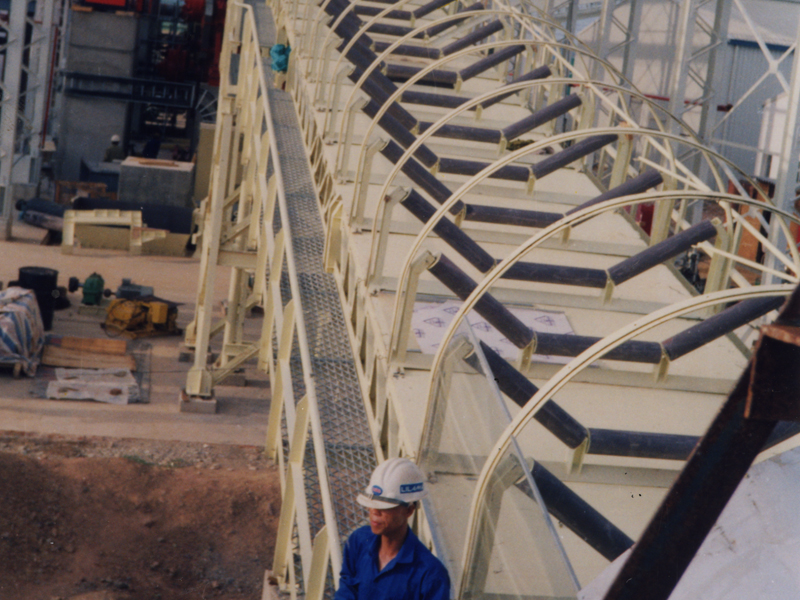
Structural and Environmental Considerations in Conveyor Design
Mining environments are harsh, so structural design has to account for more than just the material being carried.
- Dust control: Enclosed or pipe conveyor designs for dusty minerals like bauxite and coal.
- Weather protection: Covered gantries and sealed belt designs for open pit exposure.
- Corrosion resistance: Material selection for coastal or high humidity mining sites.
- Seismic and structural loading: Support structure design for the specific terrain.
- Fire resistant belting: Mandatory for underground coal mining applications.
So, the structural frame around the conveyor is as much a design consideration as the belt mechanics themselves.
Compliance and Safety in Conveyor Design
Mining conveyor systems operate under strict safety and quality standards. Design has to build in:
- Emergency stop pull cords along the full conveyor length
- Belt sway switches and blocked chute sensors
- Guarding at nip points and transfer stations
- Compliance with ISO 9001, ISO 14001, and ISO 45001 quality, environmental, and safety management standards
Methods India’s mining conveyor systems are engineered under ISO 9001, ISO 14001, and ISO 45001 certified processes, reflecting more than four decades of specialized experience in bulk material handling equipment manufacturing.
Designing Mining Conveyors for Long Term Maintenance and Lifecycle Cost
A conveyor that’s cheap to build but expensive to maintain isn’t actually a good investment. So, design decisions should always be weighed against the total lifecycle cost, not just the upfront capital expenditure.
A few design choices that directly affect long term maintenance:
Access walkways and platforms: Built into the structure from the start, so inspection and maintenance crews aren’t improvising access years later.
Modular belt sections: Allow faster replacement of worn sections without shutting down the entire line.
Standardized components: Idlers, pulleys, and bearings sourced to common specifications reduce spare parts inventory and shorten repair time.
Condition monitoring points: Built-in sensor locations for belt tension, temperature, and vibration monitoring, so problems are caught before they become failures.
So, a well designed mining conveyor isn’t just engineered to run. It’s engineered to be maintained efficiently, which is often the difference between a system that delivers 20 years of reliable service and one that becomes a constant maintenance headache within five.
Common Belt Conveyor Design Mistakes in Mining Projects
Even experienced teams can run into avoidable problems if design considerations are rushed.Some of the most common mistakes include:
- Sizing the conveyor for average throughput instead of peak throughput, leading to bottlenecks during high production periods.
- Underestimating belt sag by spacing idlers too widely to save on upfront cost.
- Ignoring future expansion plans, which forces costly retrofits when the mine grows.
- Choosing standard conveyors for routes that would be better served by pipe conveyors,resulting in ongoing spillage and dust issues.
- Overlooking impact zones at loading points, leading to early belt cover failure.
- Failing to account for seasonal weather extremes in structural and material selection.
So, avoiding these mistakes usually comes down to spending enough time in the design and site assessment phase, rather than rushing straight to fabrication.
Why Experienced Engineering Partners Matter in Belt Conveyor Design
Belt conveyor design isn’t a one size fits all exercise. Every mine has different material properties, different terrain, and different throughput targets. So, working with a manufacturer that combines in-house design expertise with proven global execution makes a measurable difference. With projects delivered across 36 countries,including a pipe conveyor system for PETRONAS in Malaysia, Methods India brings that depth of experience to every mining conveyor project, backed by a 1,80,000 sq. ft. manufacturing facility and a team of 450+ employees.
Final Thoughts
Belt conveyor design for mining and bulk material applications comes down to getting the fundamentals right: material characteristics, belt width and speed, incline angle, idler selection, pulley design, and structural resilience. Cut corners on any one of these, and the conveyor will remind you of it, usually at the worst possible time. Design it right, and the conveyor becomes the most reliable part of the entire operation.
If you’re planning a mining or bulk material handling project and need a conveyor system engineered around your site’s actual conditions, Methods India can help you design it right the first time.