

Belt Conveyor Capacity: How to Calculate TPH and Select the Right System
Belt conveyor capacity is the main factor in designing a conveyor system for material handling. If the conveyor is too small, it won’t be able to do the required material flow. Also an oversized system can create unnecessary expense for equipment, energy and maintenance. The capacity of a conveyor is generally measured in tons per hour (TPH). This figure shows the quantity of material that a belt conveyor can transport from one place to another in an hour.
The right choice of conveying capacity is important for smooth and reliable flow of materials in industries like mining, cement, steel, power generation, ports and other bulk material handling applications.
What Is Belt Conveyor Capacity?
Belt conveyor capacity refers to the maximum quantity of material that a conveyor can transport in a given time period, usually expressed in TPH.
The actual capacity will depend on a number of factors including:
- Width of belt
- Speed of belt
- Bulk density of material
- Loading of cross section
- Conveyor inclination
- Loading of cross section
- Operating conditions
For example, a coal conveyor will have different capacity requirements than a conveyor handling iron ore, limestone or clinker. Therefore, the conveyor capacity should always be calculated for the actual material and operating conditions.
How Is Belt Conveyor Capacity Calculated?
A basic approach to estimating belt conveyor capacity is based on the amount of material carried by the belt and the speed at which the belt moves.
A commonly used relationship is:
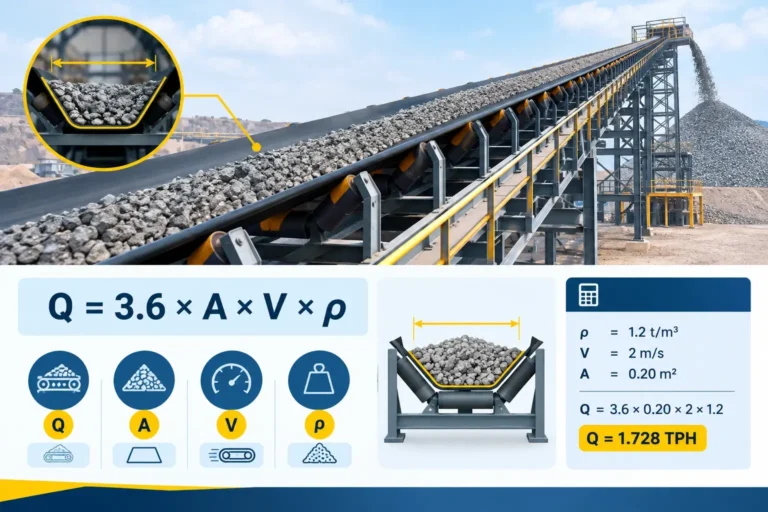
Q = 3.6 × A × V × ρ
Where:
- Q = conveyor capacity in tonnes per hour (TPH)
- A = cross-sectional area of material on the belt in m²
- V = belt speed in m/s
- ρ = bulk density of the material in tonnes/m³
The cross-sectional area depends on the belt width, troughing arrangement and the loading condition of the material.
In practical conveyor design, additional factors are considered to account for the material characteristics, belt loading and operating conditions. Therefore, the formula should be treated as a capacity estimation method rather than a substitute for detailed engineering calculations.
Example of Belt Conveyor TPH Calculation
Let an example,a conveyor is designed to transport a bulk material with the following approximate conditions:
- Material bulk density: 1.2 tonnes/m³
- Belt speed: 2 m/s
- Material cross-sectional area: 0.20 m²
Using the basic relationship:
Q = 3.6 × 0.20 × 2 × 1.2
Q = 1.728 TPH
This simple example shows the relationship between the material loading, belt speed and the density. In an actual industrial conveyor system the loading area and other design parameters would be based on detailed engineering calculations.
Factors That Affect Belt Conveyor Capacity
Calculating TPH is not simply a matter of choosing a belt and increasing its speed. Several design parameters influence the actual conveying capacity.
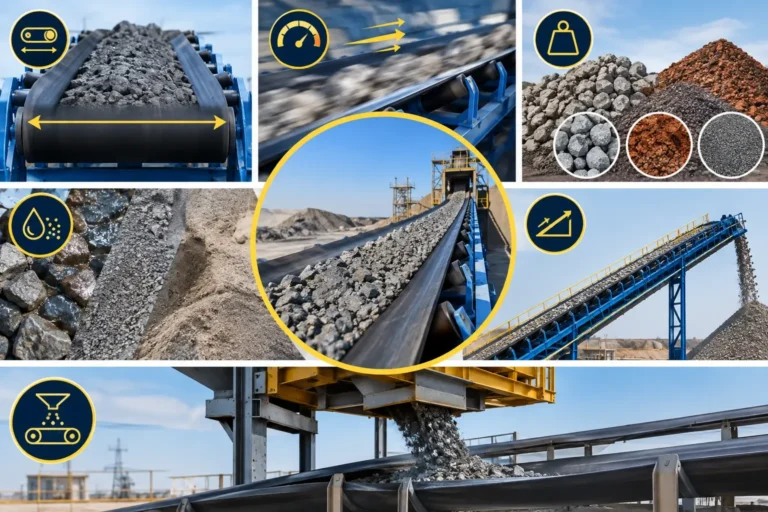
Belt Width
The belt’s width directly impacts the amount of material it can carry. A wider belt can generally hold a larger material cross section.
Belt Speed
Increasing belt speed can increase conveying capacity, but higher speed is not always the best solution.
Excessive belt speed may result in:
- Material spillage
- Dust generation
- Increased belt wear
- Higher maintenance requirements
- Greater impact at loading and discharge points
The appropriate speed should therefore be selected according to the material and application.
Material Bulk Density
Different materials have different densities. A conveyor carrying a dense material such as iron ore will have different capacity requirements from a system handling a lighter material. Bulk density should be considered when converting the volume of material being transported into tonnes per hour.
Material Characteristics
Material size, moisture content, abrasiveness and flowability can all affect conveyor performance. Large or irregularly sized materials may require a different loading arrangement and belt specification compared with fine, free-flowing materials.
Conveyor Inclination
The angle of the conveyor can influence the amount of material that can be safely carried. As the inclination increases, the possibility of material rollback or spillage also increases. The belt, speed and loading conditions must therefore be selected according to the conveyor’s inclination.
Loading Conditions
Consistent material loading helps the conveyor operate closer to its intended capacity. Uneven loading can cause belt tracking problems. Also create spillage and inefficient material transport. Proper loading of material and transfer arrangements are important for maintaining reliable operation.
Why Accurate Capacity Selection Matters?
Proper capacity selection helps ensure the conveyor can meet the plant’s material handling needs without oversizing.
An appropriately designed conveyor can provide:
- Consistent material flow
- Better equipment utilization
- Reduced material spillage
- Improved energy efficiency
- Lower maintenance requirements
- Reliable long-term operation
Belt Conveyor Capacity for Different Industries
Belt conveyors are commonly used to transport bulk materials in industries where large quantities of material need to be moved on a continuous basis.
Mining
Heavy-duty conveyors are often used to transport such materials as coal, iron ore and other minerals in mining. Capacity, durability and reliable operation are important considerations.
Cement
Belt conveyors are used for handling limestone, coal, clinker and other raw materials in cement plants. The conveyor’s capacity must be equal to the material flow between the single stages of the plant.
Power Plants
In power generation facilities, belt conveyors are commonly used in coal handling systems. Reliable material flow is essential for maintaining continuous plant operation.
Steel Plants
Steel manufacturing involves the movement of large quantities of raw materials. Properly designed belt conveyor systems help transport materials efficiently between storage and processing areas.
Ports and Bulk Terminals
Ports handling coal, minerals, grains and other bulk materials often require high-capacity conveyor systems capable of continuous operation over long distances.
Why Accurate Capacity Selection Matters?
For applications involving large material flow, a high-capacity belt conveyor must be designed around the complete operating requirement rather than capacity alone.
The system may require suitable:
- Conveyor belt width
- Belt speed
- Drive arrangement
- Pulleys
- Idlers
- Take-up system
- Loading and discharge arrangement
- Belt protection
- Structural support
The conveyor should also be designed to handle expected variations in material flow and operating conditions.
Choosing a Belt Conveyor Manufacturer
Selecting the right manufacturer is just as important as calculating the required capacity. A reliable belt conveyor manufacturer in India should be able to understand the material,capacity, conveying distance, inclination and site conditions before finalizing the conveyor design.
The manufacturer should have the engineering capability to design the complete system according to the application’s requirements rather than offering a standard conveyor without considering actual operating conditions.
Methods India provides bulk material handling and conveyor solutions for demanding industrial applications. Its conveyor systems can be engineered around factors such as capacity, material characteristics, conveying distance and plant requirements.
Conclusion
Belt conveyor capacity is a very important parameter in designing an efficient bulk material handling system. TPH depends on different variables such as material cross sectional area,belt speed and bulk density and practical design considerations such as belt width, material characteristics, inclination and loading conditions.
A proper capacity calculation helps prevent bottlenecks, unnecessary oversizing and unreliable operation. More importantly, the conveyor should be selected as a complete system based on the actual requirements of the plant. For industries handling large volumes of bulk material, working with an experienced belt conveyor manufacturer in India can help ensure that the conveyor is properly designed,sized and integrated with the overall material handling system.
FAQs
How much material needs to be transported per hour?
Determine the normal operating capacity as well as the maximum expected material flow.
What type of material will the conveyor handle?
Identify material density, lump size, moisture, abrasiveness and flow characteristics.
What is the conveying distance?
The length of the conveyor affects the drive arrangement, power requirement and overall
system design.
What is the conveyor inclination?
Inclined conveyors may require special consideration for belt selection, loading and material
retention.
What belt width and speed are appropriate?
These should be selected based on the required TPH and material characteristics rather
than choosing them independently.