

Coal Conveyors for Thermal Power Plants:Complete Buying Guide (2026)
Coal conveyors are the backbone of every thermal power plant’s fuel supply chain. Without them, coal does not move from the unloading point to the bunkers. And if coal does not reach the bunkers,the boilers stop. When the boilers stop, power generation stops. It is that direct.
Thermal power plants in India run 24 hours a day, 365 days a year. The coal handling system runs just as continuously. So, the coal conveyors powering this system need to be engineered for non-stop, heavy-duty operations. They cannot be generic off-the-shelf systems. They need to be designed for your plant’s coal throughput, layout, coal type, and operating environment.
Methods India stands out as a leading bulk material handling equipment manufacturer with over 40 years of experience in designing and delivering coal handling systems for thermal power plants. We design, fabricate, erect, and commission coal conveyor systems that keep your plant’s fuel supply running without interruptions.
In this complete buying guide for 2026, you will learn what coal conveyors are, what challenges thermal power plants face without the right coal conveyor system, what types of coal conveyors are used in power plants, what to look for when buying coal conveyors, and why Methods India is the right partner for your plant.
What Are Coal Conveyors in a Thermal Power Plant?
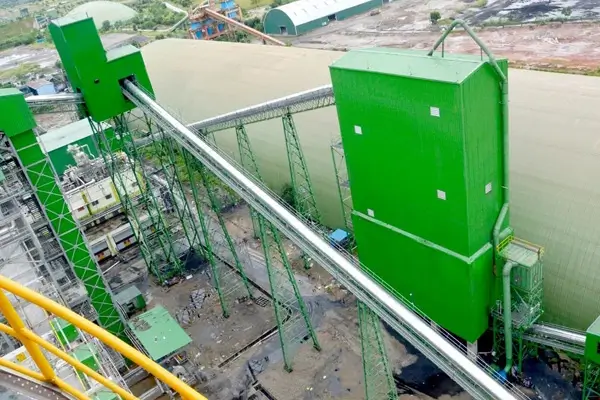
Coal conveyors in a thermal power plant are heavy-duty belt-based material handling systems. They transport coal continuously from the point of unloading through a series of stages including screening, crushing, and stacking, all the way to the coal bunkers that feed the boilers.
A typical coal conveyor system in a thermal power plant covers the full material flow path. Coal arrives at the plant, gets unloaded, moves to a primary crusher, passes through vibrating screens,gets conveyed to the coal yard for stockpiling, gets reclaimed from the yard when needed, and is then fed into the boiler bunkers by a series of conveyors and tripper systems.
So, coal conveyors in a thermal power plant are not a single conveyor. They are a connected system of multiple conveyors, each engineered for its specific role in the fuel handling chain. Any weak link in this system can disrupt coal supply to the boilers and affect power generation output.
What Problems Do Thermal Power Plants Face Without the Right Coal Conveyor System?
Without the right coal conveyors, thermal power plants face serious operational and financial problems. These problems affect coal supply reliability, boiler performance, plant safety, and maintenance costs. Here are the key challenges:
1. Disruption in Coal Supply to Boilers
The most direct consequence of a poor coal conveyor system is interrupted coal supply to the boilers. If a conveyor breaks down at any point in the fuel handling chain, coal stops reaching the bunkers. So, boiler load has to be reduced or the unit has to be shut down. In a thermal power plant, an unplanned shutdown means lost power generation and missed supply commitments.
A properly engineered coal conveyor system from an experienced manufacturer eliminates single points of failure. Redundant conveyor paths, correctly sized drive systems, and reliable mechanical components ensure continuous coal supply even during maintenance windows.
2. Belt Failures and Frequent Breakdowns
Using the wrong grade of conveyor belt for coal handling leads to rapid wear, belt tears, and frequent splicing failures. Coal is abrasive. Fine coal particles act like sandpaper on the belt surface and edges. Lumpy coal creates high impact loads at the loading zone. So, a belt not rated for these conditions wears out fast and breaks down frequently.
Each breakdown requires the conveyor to stop. Maintenance teams have to splice belts, replace rollers, or repair drives. During that time, coal supply to the boiler is disrupted. Over a year of operations, these repeated breakdowns add up to significant lost production and high maintenance expenditure.
3. Material Spillage and Coal Dust
Poorly designed loading chutes, incorrect belt troughing angles, and inadequate skirting allow coal to spill off the belt at transfer points and along the conveyor. In a thermal power plant, coal spillage is more than a housekeeping problem. Spilled coal creates slip hazards on walkways. It accumulates under return rollers and causes roller failures. It also generates coal dust, which is a fire and explosion risk.
So, the right coal conveyor system is designed with enclosed transfer chutes, proper skirting boards,belt cleaners, and dust suppression provisions. These features keep coal on the belt and out of the plant environment.
4. High Energy Consumption
Incorrectly designed coal conveyors consume more power than necessary. Oversized drive motors,excessive belt tension, high-friction idlers, and poor belt alignment all increase the electrical load. In a thermal power plant running coal conveyors around the clock, excessive energy consumption translates directly into higher operating costs.
The right coal conveyor manufacturer engineers drive systems correctly sized for the actual load.Variable frequency drives (VFDs), low-friction idlers, and optimised belt tension reduce power consumption and heat buildup in motors and bearings. So, energy-efficient coal conveyors reduce your plant’s auxiliary power consumption over their entire operating life.
5. Safety Hazards for Plant Personnel
Coal handling is a hazardous operation. Moving conveyor belts, rotating pulleys, heavy coal loads,and combustible dust all create risks for plant personnel. A coal conveyor system that lacks proper guarding, emergency stop systems, and belt protection devices is a serious safety liability.
Belt misalignment and slippage can cause belt fires. Coal dust accumulation near drive motors is an ignition risk. Exposed rotating parts near walkways create entanglement hazards. So, the right coal conveyor manufacturer designs safety into the system from the start — not as an add-on after the system is built.
What Types of Coal Conveyors Are Used in Thermal Power Plants?
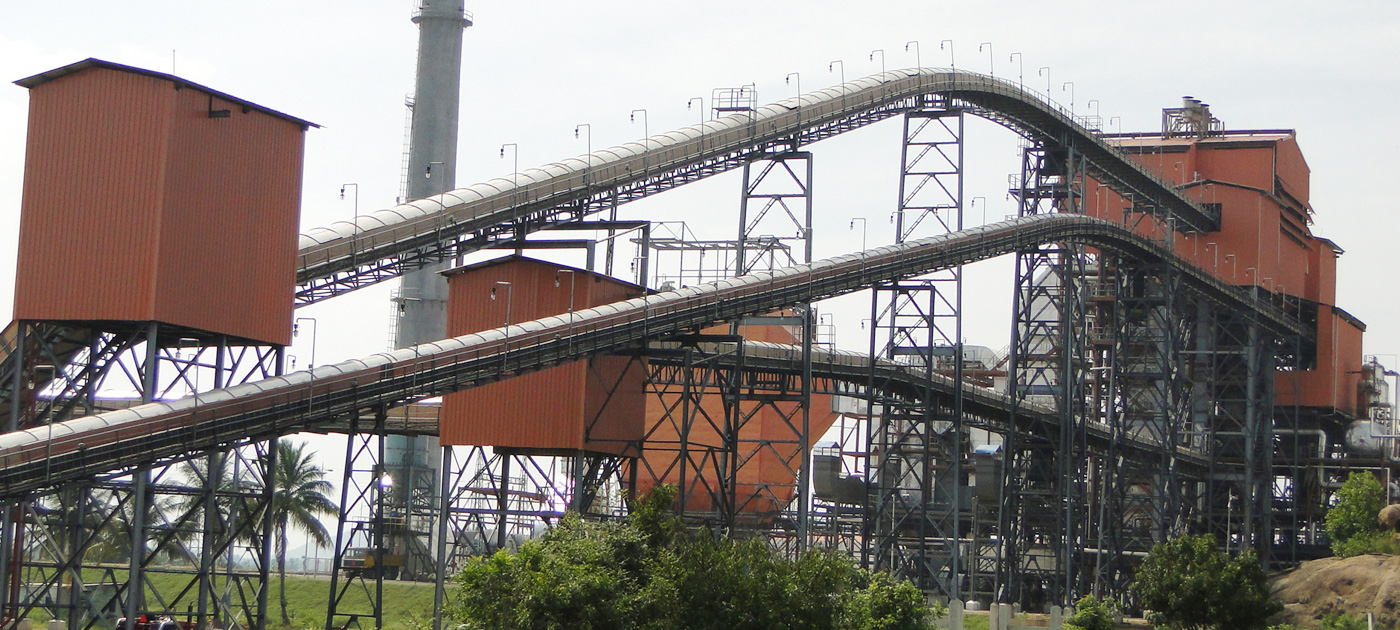
Different stages of the coal handling process in a thermal power plant require different types of conveyors. Here is a complete overview of the coal conveyor types used:
1. Belt Conveyors
Belt conveyors are the most widely used coal conveyors in thermal power plants. They use a continuous loop of rubber or steel-cord belt supported on troughing idlers to transport coal from one point to another. Belt conveyors in power plants handle everything from coal unloading to crusher feeding to bunker filling.
Methods India designs belt conveyors for coal handling with abrasion-resistant belts, heavy-duty idlers, corrosion-protected steel frames, and PLC-based protection systems. So, our belt conveyors for thermal power plants are engineered to handle high-volume, continuous coal transport reliably across the entire fuel handling chain.
2. Pipe Conveyors
Pipe conveyors are an advanced form of belt conveyor where the belt rolls into a fully enclosed tube using specialised idlers. This design completely seals the coal inside the belt. So, there is no spillage and no dust escaping into the environment. Pipe conveyors are used in thermal power plants where the conveyor route passes through environmentally sensitive areas, residential zones, or areas where dust emissions must be controlled.
Methods India has delivered pipe conveyor systems including a 2.1 km long pipe conveyor for PETRONAS in Malaysia. So, our experience with long-distance enclosed conveying gives us the engineering depth to design pipe conveyors for thermal power plant applications where conventional belt conveyors are not suitable.
3. Tripper Conveyors
A tripper conveyor is a traversing conveyor system installed above the boiler bunker gallery. It moves back and forth along the bunker row and discharges coal into each bunker through a tripper mechanism. So, a single feed conveyor can distribute coal evenly across all the bunkers in a thermal power plant.
Tripper conveyors are critical for bunker filling operations. They need to be precisely engineered for the bunker layout, the coal throughput, and the travel speed of the tripper carriage. Methods India designs tripper conveyors for thermal power plants as part of the complete coal handling system.
4. Stacker and Reclaimer Conveyors
The coal yard in a thermal power plant stores large volumes of coal in open stockpiles. Stacker conveyors build these stockpiles by depositing coal in a controlled pattern. Reclaimer conveyors then recover this coal from the stockpile and feed it back into the handling system when required.
Stacker-reclaimers in thermal power plants handle very large volumes of coal. So, the conveyors integrated into these machines need to be designed for high capacity, continuous duty, and reliable operation in outdoor environments where wind, rain, and coal dust are constant challenges.Methods India designs and fabricates the complete conveyor systems for stacker-reclaimer machines.
5. Submerged Ash Belt Conveyors
Not all conveyors in a thermal power plant carry coal. The bottom ash produced by the boilers needs to be removed from the furnace continuously. Submerged ash belt conveyors operate partially or fully submerged in water. The water cools and quenches the hot ash before it is conveyed out of the furnace.
Methods India supplies submerged ash belt conveyors for thermal power plants with abrasion and corrosion-resistant belts, sealed gearboxes, and heavy-duty idlers designed to handle hot, wet, and abrasive bottom ash reliably. So, our submerged ash conveyors have been supplied to clients including Bannari Amman Sugars and power plant customers across India.
What Should You Look for When Buying Coal Conveyors for a Thermal Power Plant?
Choosing the right coal conveyor manufacturer for your thermal power plant is a long-term decision.The coal conveyor system will run for 20 to 30 years. So, the factors you evaluate during procurement will determine your plant’s coal handling reliability for decades. Here is what to look for:
1. Power Plant-Specific Engineering Experience
The coal conveyor manufacturer you choose must have direct experience in thermal power plants.Coal handling in power plants is different from mining or cement plant conveying. The volumes are very high. The system runs continuously around the clock. The coal types vary. And the conveyor system must integrate tightly with wagon tipplers, crushers, screens, stacker-reclaimers, and bunker feeding systems.
So, a manufacturer without power plant experience will not understand these integration requirements. They will not know how to design for 24/7 continuous duty. And they will not have solved the real problems that power plant coal conveyors face like belt fires, chute blockages,tripper misalignment, and bunker overfilling.
Methods India has 40+ years of experience in coal handling systems for thermal power plants, steel mills, and cement plants. We understand the real challenges of power plant coal handling and design our conveyor systems accordingly.
2. In-House Engineering and Design Capability
A coal conveyor system for a thermal power plant is not a catalogue item. It is a custom-engineered system. The design depends on your plant’s coal throughput, the number of generating units, the bunker capacity, the coal yard layout, the coal type and size distribution, and the site conditions.
So, the right coal conveyor manufacturer must have in-house engineering capability. They must be able to perform detailed load calculations, size drive systems correctly, design transfer chutes for your coal type, and produce complete engineering drawings and specifications. A manufacturer who relies on generic designs for thermal power plant coal conveyors is not an engineering partner.
Methods India has an independent in-house design facility. Every coal conveyor system we deliver is engineered from scratch for the specific power plant. We do not adapt standard designs. All calculations, structural drawings, and equipment specifications are produced by our in-house engineering team.
3. In-House Fabrication and Quality Control
The quality of a coal conveyor system depends entirely on the quality of fabrication. Structural frames must be welded to precise tolerances to maintain belt alignment over long conveyor spans.Pulley shells must be machined accurately to ensure even belt wear. Drive couplings and gearboxes must be selected and installed correctly to prevent vibration and premature failure.
So, a coal conveyor manufacturer who outsources fabrication loses control over quality at the most critical stage. Component fit and material quality cannot be guaranteed. And when something fails in the field, accountability becomes unclear.Methods India fabricates all coal conveyor system components in-house at its manufacturing facility in Bangalore. Machine shop work,structural fabrication, and protective painting are all done under one roof. So, every coal conveyor system that leaves our facility has been manufactured under complete quality control.
4. Turnkey Execution Capability
A thermal power plant coal conveyor system is a complete plant system, not a single piece of equipment. It involves civil works for conveyor galleries and trestles, structural steel for support structures, mechanical equipment including conveyors, crushers, and feeders, electrical systems for drives and controls, and PLC-SCADA automation for the entire coal handling sequence.
So, a manufacturer who can only supply the conveyors leaves you to coordinate civil, structural,electrical, and automation contractors separately. This creates coordination gaps, interface disputes, and project delays that are common in power plant construction. The right coal conveyor manufacturer for a thermal power plant offers complete turnkey execution.
Methods India delivers complete turnkey coal handling systems for thermal power plants. We handle everything from concept engineering and design through structural fabrication, equipment supply, civil interface coordination, erection, PLC and SCADA integration, commissioning, and handover. So, single-point responsibility with Methods India means no gaps and no disputes between contractors.
5. PLC and SCADA Integration Capability
Modern coal conveyor systems in thermal power plants run on automated PLC-SCADA control systems. The PLC manages the start-stop interlocking between conveyors, the belt protection trips,and the sequential coal flow control. The SCADA system gives operators a central view of the entire coal handling chain, including live alarm management and production reporting.
So, the coal conveyor manufacturer you choose must be able to integrate PLC and SCADA automation into the coal handling system. A manufacturer who supplies mechanical conveyors without the automation capability leaves you with a gap in your coal handling system that another contractor has to fill.
Methods India integrates PLC-based interlocking, belt protection systems, and SCADA monitoring into all coal handling systems we deliver for thermal power plants. Our coal conveyor systems include belt misalignment switches, speed sensors, pull-cord stops, blocked chute detectors, and VFD-based drive control, all connected to the PLC and monitored through SCADA.
6. Coal Dust Control and Environmental Compliance
Thermal power plants are subject to pollution control norms from the CPCB and State Pollution Control Boards. Coal dust from handling operations is one of the main sources of particulate emissions in and around power plants. So, the coal conveyor system must include effective dust control measures.
Enclosed transfer chutes, belt cleaners, skirting boards, water spray systems at transfer points, and fully enclosed pipe conveyor options are all part of a comprehensive coal dust control approach. The right coal conveyor manufacturer designs these features into the system as standard — not as optional upgrades.
Methods India designs dust control into every coal conveyor system for thermal power plants. Our systems comply with CPCB norms and applicable environmental standards. So, our clients do not face dust-related compliance issues after the system is commissioned.
7. Safety Features and Compliance with Safety Standards
Safety is non-negotiable in a coal handling system. Moving belt conveyors, rotating pulleys, heavy coal loads, and combustible dust all create serious hazards. So, the coal conveyor manufacturer must design comprehensive safety systems into every conveyor in the coal handling chain.
Full-length guards on all moving parts, emergency pull-cord switches along each conveyor, belt misalignment and slip detection systems, anti-rollback devices on inclined conveyors, fire-retardant belts in enclosed areas, and automatic dust suppression at all transfer points are minimum requirements for a safe coal conveyor system in a thermal power plant.
Methods India designs all coal conveyor systems in compliance with ISO 45001 safety standards and applicable Indian safety norms. Our coal conveyors for thermal power plants include all required safety features as part of the standard design. So, safety compliance is built in, not bolted on.
8. International Track Record and Proven Installations
A coal conveyor manufacturer with an international track record has proven their systems under a wide range of operating conditions, coal types, and project requirements. International clients impose more stringent quality and documentation standards. So, a manufacturer with international project experience has already demonstrated the engineering depth needed for thermal power plant coal conveyor systems.
Methods India has delivered bulk material handling systems across 36 countries. Our coal handling systems are operating in thermal power plants and industrial facilities across India, Africa, Southeast Asia, the Middle East, and Australia. So, when you choose Methods India, you are choosing a manufacturer with a globally proven track record in coal conveyor systems.
9. After-Sales Support and Spare Parts Network
A coal conveyor system in a thermal power plant runs continuously, 24 hours a day. When a wear component needs replacement or a technical fault occurs, you need fast access to genuine spare parts and technical support. So, a coal conveyor manufacturer with a weak after-sales network leaves your plant exposed to extended downtime every time a component wears out or fails.
Before selecting your coal conveyor manufacturer, ask specifically about their after-sales service network.Ask which cities they have service teams in, what their typical response times are, and whether they maintain stock of critical spare parts.
Methods India maintains service teams across Bangalore, Hyderabad, and Chennai. We ensure prompt technical support and fast spare parts availability for all coal conveyor systems we commission. So, our clients get the support they need quickly, without extended waits that affect power plant operations.
Why Choose Methods India for Coal Conveyors in Your Thermal Power Plant?
Plants should choose Methods India as their coal conveyor manufacturer because we offer a combination that very few manufacturers can match. 40+ years of coal handling experience,complete in-house engineering and fabrication, turnkey execution capability, PLC-SCADA integration, and a proven international track record. Here is what makes Methods India the right choice:
40+ Years of Experience: Methods India has been designing and delivering coal handling and bulk material handling systems since 1982. We have worked with thermal power plants, steel mills,cement plants, and mining operations across India and internationally. So, we understand the real- world demands of coal conveyor systems in continuous-duty power plant environments.
End-to-End In-House Capability: Design, engineering, fabrication, erection, PLC-SCADA integration,and commissioning — everything is handled in-house at Methods India. So, there are no gaps between our engineering drawings and the finished system, and no coordination issues between our design team and our erection team.
Custom-Engineered Systems: Every coal conveyor system we deliver for a thermal power plant is designed specifically for that plant’s coal throughput, layout, coal type, and operating requirements. We do not use off-the-shelf designs for power plant coal handling applications.
Proven Coal Handling References: Methods India has delivered complete coal handling systems for power plants and heavy industry clients across India and internationally. Our systems include belt conveyors, pipe conveyors, tripper systems, stacker-reclaimer conveyors, and submerged ash conveyors — the full range of coal conveyor equipment a thermal power plant needs.
ISO Certified Quality: Methods India’s manufacturing and project execution processes are certified to ISO 9001:2015, ISO 14001:2015, and ISO 45001. So, every coal conveyor system we fabricate meets documented quality standards covering materials, fabrication, inspection, and commissioning.
Global Reach: With installations in 36 countries, Methods India brings internationally proven engineering experience to every thermal power plant coal conveyor project. Our systems operate reliably in diverse climatic conditions, coal types, and plant configurations around the world.
Conclusion: Choosing the Right Coal Conveyor Manufacturer for Your Thermal Power Plant
Choosing the right coal conveyor manufacturer for your thermal power plant is a decision that affects your plant’s coal supply reliability for the next 20 to 30 years. A poor choice leads to frequent breakdowns, interrupted coal supply, high maintenance costs, and unsafe operating conditions. So, when evaluating manufacturers, assess their power plant experience, in-house engineering and fabrication capability, turnkey execution model, PLC-SCADA capability, dust control design, safety compliance, and after-sales support.
Methods India stands out as a coal conveyor manufacturer with the engineering depth, manufacturing capability, and track record to deliver complete coal handling systems for thermal power plants. With 40+ years of experience, in-house design and fabrication, a global track record across 36 countries, and a full turnkey execution model, Methods India is the right partner for your thermal power plant coal conveyor requirements.
Contact Methods India today to discuss your thermal power plant coal conveyor needs. Let us help you engineer a coal handling system that keeps your plant running at full capacity — reliably, safely, and efficiently.
FAQs
What are coal conveyors and why are they important in a thermal power plant?
Coal conveyors are heavy-duty belt systems that transport coal continuously through the entire fuel handling chain of a thermal power plant — from unloading to crushing to stockpiling to bunker feeding. Without reliable coal conveyors, coal does not reach the boilers. And when coal does not reach the boilers, power generation stops. So, coal conveyors are not optional equipment in a thermal power plant. They are the fuel supply lifeline of the entire plant.
What type of conveyor belt is best for coal handling in thermal power plants?
Coal handling in thermal power plants requires abrasion-resistant rubber belts that can handle both fine coal dust and large coal lumps without rapid wear. In areas with fire risk, fire-retardant belts are
mandatory. For enclosed conveying where dust control is critical, steel-cord belts used in pipe conveyor configurations are the right choice. So, the correct belt specification depends on the specific application within the coal handling system, there is no single belt type that suits every position.
How do you prevent coal dust problems in a thermal power plant conveyor system?
Preventing coal dust requires a combination of design measures. Enclosed transfer chutes with proper air sealing prevent dust from escaping at loading points. Belt cleaners on the return belt remove residual coal before it falls as dust. Water spray systems at transfer points suppress dust at the source. Pipe conveyors eliminate dust entirely for inter-plant conveying routes. So, dust control is a design requirement, not a maintenance solution — it needs to be built into the coal conveyor system from the start.
What is a tripper conveyor and where is it used in a thermal power plant?
A tripper conveyor is a traversing conveyor system installed in the bunker gallery of a thermal power plant. It travels back and forth along the row of boiler bunkers and discharges coal into each bunker through a tripper mechanism. So, a single feed conveyor can fill all the bunkers in the plant without multiple dedicated feed conveyors for each bunker. Tripper conveyors are a standard part of every thermal power plant coal conveyor system.
Does Methods India offer turnkey coal conveyor systems for thermal power plants?
Yes. Methods India delivers complete turnkey coal handling systems for thermal power plants. This includes engineering design, structural fabrication, supply of all conveyor equipment, civil interface, erection, PLC and SCADA integration, commissioning, and handover. So, you deal with one team and one point of responsibility from the start of the project to the day the system goes live. Contact Methods India to discuss your thermal power plant coal conveyor requirements.