

Key Challenges in Industrial Air Quality and How an Air Pollution Control System Solves Them
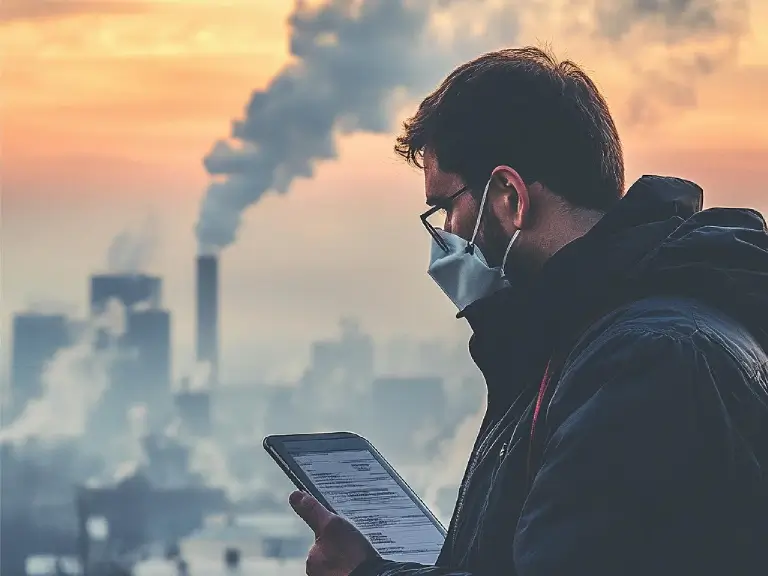
Industrial growth strengthens economies, creates employment, and fosters advancement. Yet with development comes the critical responsibility of protecting air quality — both within facilities and in surrounding ecosystems. Also,poor air quality from industrial operations not only harms worker health and community well being but also risks regulatory fines, environmental degradation, and reputational damage.In this blog, we explore the key challenges in industrial air quality and how adopting a robust air pollution control system for industrial applications can solve them — with insights grounded in the latest research and industry practices.
Why Industrial Air Quality Matters
Indoor and outdoor air quality in industrial settings directly influences:
- Worker health and safety
- Regulatory compliance
- Operational efficiency
- Community wellbeing
- Sustainable business growth
Also,industrial emissions typically include particulate matter (PM2.5, PM10), volatile organic compounds (VOCs), sulfur dioxide (SO₂), nitrogen oxides (NOₓ), and other harmful pollutants with significant health and environmental impacts. Without proper controls, these pollutants contribute to respiratory illnesses, ecological degradation, and stringent regulatory action.
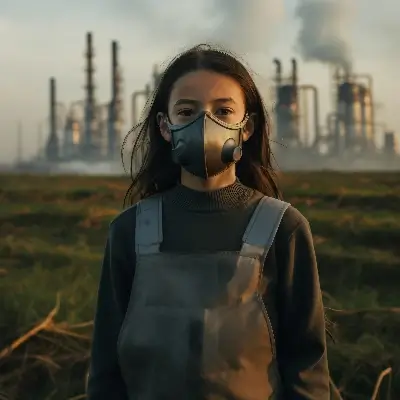
Key Challenges in Industrial Air Quality
1. Managing Particulate Matter & Fine Dust
Also,industries similar to cement manufacturing, power plants, steel mills, and metal fabrication release large amounts of particulate matter. So,these tiny particles can get deep into the lungs and may lead to asthma, heart problems, and long-term breathing issues.
Why it’s challenging:
Particulate matter comes in many different sizes and types.Standard HVAC systems cannot effectively filter out the smallest particles.The amount of emissions often varies depending on the amount produced and the specific processes used.
Solution:
Advanced filtration systems, such as bag house filters and electrostatic precipitators (ESPs), can capture up to 99% of particles before they are released into the air.
2. Reducing Gaseous Pollutants & VOCs
VOCs, NOₓ, and SO₂, which are Volatile Organic Compounds, contribute to smog formation, ozone depletion, and human health hazards. So,the most common sources of these emissions are burning, chemical manufacturing, and the use of fuel.
Challenges include:
- Detecting and quantifying gas emissions in real time.
- Also,removing specific gases without disrupting industrial processes.
- Meeting evolving regulatory standards for emissions.
Solution(s):
- Thermal oxidizers break down VOCs into CO₂ and H₂O at high temperatures.
- Selective catalytic reduction (SCR) targets NOₓ emissions.
- Activated carbon systems are effective for mercury and certain VOCs.
Also,activated carbon systems are effective for mercury and certain VOCs.
3. Compliance with Stringent Regulations
Industrial emissions regulations vary by region but are becoming increasingly stringent worldwide. Non-compliance can produce hefty fines, license revocation, and project delays.
The challenge:
Regulatory frameworks evolve rapidly,necessitating continuous adaptation.Poor monitoring infrastructure further complicates compliance efforts.
Solution:
A combination of Continuous Emission Monitoring Systems (CEMS) and intelligent data analytics allows industries to track real-time emissions and adjust processes accordingly, reducing legal risk and enhancing transparency.
4. Capturing Fugitive Emissions
Not all industrial air pollution is emitted through controlled stacks. Fugitive emissions — leaks from valves, flanges, storage tanks, and equipment vents — can be a hidden source of significant VOC and particulate pollution.
Why this is tough:
Hard to detect with traditional monitoring.
Solution:
Leak detection and repair (LDAR) programs, coupled with infrared gas sensing technology, enable real-time detection and proactive mitigation of fugitive emissions, significantly improving overall air quality performance.
5. Technological & Financial Constraints
While cutting-edge pollution control technologies exist, high procurement and maintenance costs can deter adoption — especially for small- and medium-sized enterprises (SMEs). Skilled operation and regular maintenance are also critical to system effectiveness.
Solution:
- Employ energy-efficient equipment to reduce long-term operational costs.
- Train in-house teams for routine system maintenance.
Also,partner with expert providers like Methods India for customized, scalable solutions.
How an Air Pollution Control System Solves These Challenges
A comprehensive air pollution control system for industrial applications integrates multiple technologies to tackle the issues above. Here’s how:
1. Advanced Filtration & Particulate Removal
Also,systems like baghouse filters and electrostatic precipitators mechanically trap dust and fine particles during extraction before the air is vented outdoors.
- Baghouse filters use high-temperature fabrics to trap dust with >99% efficiency.
- ESPs electrically charge particles and collect them on plates — highly effective for heavy particulate loads.
Together, these systems drastically cut down particulate emissions.
2. Targeted Gas and VOC Treatment
To handle gaseous pollutants and VOCs, pollution control systems may incorporate:
- Thermal oxidizers — thermally destroy VOCs and hazardous gases.
- Scrubbers & wet cleaning units — absorb and neutralize gases using liquid solutions.
- Biofilters — leverage microbial action to degrade organic pollutants sustainably.
This layered approach ensures harmful gases are neutralized and safely processed.
3. Real-Time Monitoring & Process Optimization
Also,modern air pollution control systems employ sensor networks to monitor emissions and optimize performance continuously.
Benefits include:
- Automated compliance reporting
- Early warning of deviations
- Predictive maintenance scheduling
Also,these features save operational costs and ensure compliance with evolving standards.
4. Customization & Scalability
Also,industrial facilities vary enormously in size, processes, and emissions profiles. An one-size-fits-all solution rarely works. Also,expert systems — like those offered by Methods India — are custom-designed to meet specific industry needs, ensuring scalable, cost-effective outcomes.
- Industrial Air Quality Best Practices Beyond Control Systems While air pollution control equipment is vital, long-term success also requires:
- Cleaner production techniques:
Process redesign, cleaner fuels, and energy-efficient upgrades reduce emissions at the source.
- Worker training & safety protocols.
- Ensuring staff understand pollution risks, monitoring controls, and safe handling practices boosts overall effectiveness.
- Community engagement & transparency.
- Sharing air quality data and mitigation strategies builds stakeholder trust.
Conclusion:
The management of air quality in industry encounters many difficulties — among them are particulate control and changing emissions standards. However, with the proper method and technology, the problems become manageable.
Also,a comprehensive air pollution control system for industrial application — paired with modern monitoring, sustainable practices, and expert guidance — provides the solution industries need to protect air quality, ensure regulatory compliance, and create healthier environments for workers and communities alike.