

Industrial Belt Conveyor Supplier for Heavy Duty Applications: A Complete Guide
Heavy duty industrial operations cannot afford weak links in their material handling chain. Whether it is a coal mine, a steel plant, a cement factory or a thermal power station, one thing they all share is the need for a reliable belt conveyor system. Choosing the right industrial belt conveyor supplier can either make or break your plant’s productivity.
Methods India is one of India’s most trusted belt conveyor manufacturers. With over 40 years of experience in bulk material handling, we design, fabricate, install and commission belt conveyor systems built for the most demanding heavy duty applications. In this blog, we look at what makes heavy duty belt conveyor systems different, what to look for in a conveyor belt supplier, and why Methods India is the partner your plant needs.
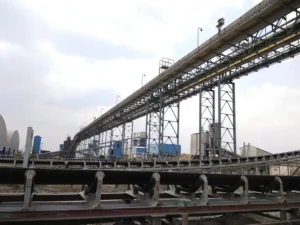
What Is a Heavy Duty Industrial Belt Conveyor System?
A belt conveyor system is a continuous loop of a flexible belt running over two or more pulleys, powered by a drive motor. The belt carries bulk material from one point to another. It sounds simple. But in heavy duty applications, everything changes. A belt conveyor system is a continuous loop of a flexible belt running over two or more pulleys, powered by a drive motor. The belt carries bulk material from one point to another. It sounds simple. But in heavy duty applications, everything changes.
In industries like mining, power, cement, steel, and sugar, these conveyor belt systems move materials like coal, iron ore, limestone, clinker, fly ash, and bagasse, sometimes over very long distances, sometimes on steep gradients, sometimes in extreme heat or dust. A poorly designed heavy duty belt conveyor will break down constantly. It will spill material. It will create safety risks. And it will cost you far more in the long run than a well-engineered system would have.
Why Does Choosing the Right Industrial Belt Conveyor Supplier Matter?
Not every conveyor belt supplier can deliver what a heavy duty plant actually needs. Many suppliers offer standard designs and call it done. But heavy duty applications demand more than that.
Here is what happens when you choose the wrong belt conveyor manufacturer:
1. Frequent Breakdowns and Unplanned Downtime
A belt conveyor system that is under-engineered for your load requirements will fail. Motors overheat. Bearings seize. Belts snap or mistrack. Every breakdown stops your production line and leads to emergency repair costs. In high-throughput plants, even a few hours of downtime can mean massive financial losses.
The right industrial belt conveyor supplier sizes everything correctly. Drive motors, gearboxes, idlers, belt grade, tension, all of it is calculated for your actual operating load. This eliminates the guesswork and reduces breakdowns dramatically.
2. High Maintenance and Spare Parts Costs
Generic belt conveyor systems use standard components that may not suit your material or environment. When those components wear out faster than expected, you end up spending heavily on spare parts, labour and repairs. Over time, these costs pile up and eat into your operating margin.
A trusted belt conveyor manufacturer uses application-specific materials. Abrasion-resistant belts for ores and coal. Heat-resistant belts for clinker and ash. Corrosion-resistant structures for humid or coastal environments. The right belt and components last far longer and cost far less to maintain.
3. Material Spillage and Wastage
Poor belt conveyor design leads to spillage. Incorrect troughing angles, improper belt tension, and badly designed transfer chutes all cause material to scatter across the plant floor. Spillage is not just wastage. It creates housekeeping problems, fire risks, dust hazards, and compliance issues.
A quality industrial belt conveyor supplier designs proper skirting, belt cleaners, and enclosed transfer chutes to contain material fully. This protects both your material and your plant environment.
4. Safety and Compliance Failures
A low-quality belt conveyor system is a safety hazard. Exposed moving parts, inadequate emergency stops, poor guarding, and non-compliant designs put workers at serious risk. They also put your plant at risk of regulatory penalties and forced shutdowns.
The right conveyor belt supplier builds safety into every stage of design. Guards, emergency stop systems, belt alignment sensors, pull cords, and PLC-based interlocks are not add-ons. They are part of the core design.
5. Higher Energy Costs
An inefficient belt conveyor system draws more power than it should. Incorrect belt tension, oversized motors, poor idler alignment, all of these waste energy. In a plant running conveyors 24 hours a day, the electricity bill adds up quickly.
An experienced industrial belt conveyor supplier integrates energy-efficient motors, Variable Frequency Drives (VFDs), and self-aligning idlers. These reduce power consumption without compromising throughput.
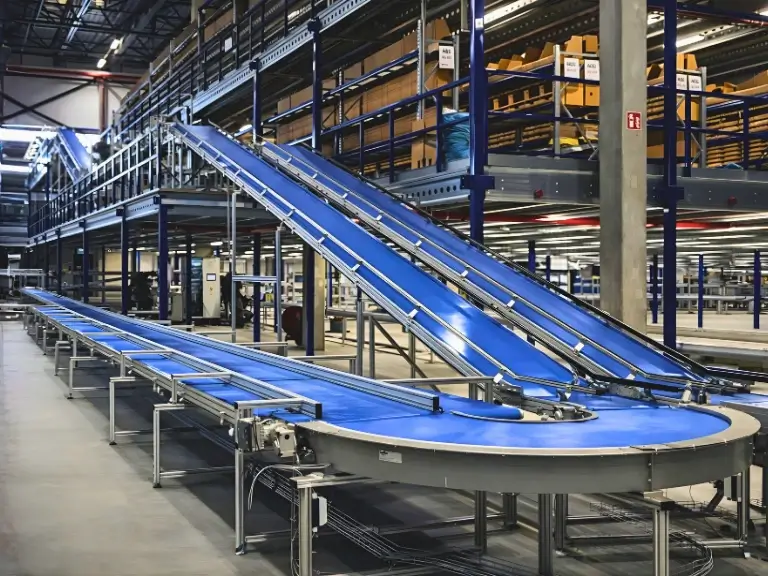
Key Features of a Heavy Duty Belt Conveyor System
When you are evaluating a belt conveyor system for heavy duty applications, here are the critical features to look for:
1. High Tensile Strength Belt
The belt is the heart of the conveyor system. For heavy duty applications, you need belts with high tensile strength. Steel cord belts are commonly used in long-distance, high-capacity applications. Fabric-ply belts work well for medium-duty and inclined conveyors. The belt must match the material, its weight, abrasiveness, temperature, and moisture content.
2. Robust Structural Frame
The conveyor frame must withstand continuous vibration, impact, and load without deforming. Heavy duty belt conveyors use thick-walled, high-grade structural steel fabricated to precise tolerances. The frame must also be corrosion-resistant, especially in mining and coastal plant environments.
3. Heavy Duty Idlers and Pulleys
Idlers support the belt and the material load between the drive and tail pulleys. In heavy duty applications, idlers must be designed for high impact loads, especially at the loading zone where bulk material drops onto the belt. Heavy duty idlers have thicker shells, sealed bearings, and are spaced closer together to handle the load. Pulleys must have adequate lagging to improve belt grip and prevent slippage.
4. Powerful Drive Systems
The drive system — motor, gearbox, and coupling — must be correctly sized for the load, belt speed, and conveying distance. Under-powered drives overheat and fail. Over-powered drives waste energy. The right industrial belt conveyor supplier performs detailed drive calculations for every application.
5. PLC-Based Automation and Safety Controls
Modern heavy duty belt conveyor systems are controlled by Programmable Logic Controllers (PLCs). These enable automated start-stop sequences, speed control, overload protection, belt slip detection, and integration with plant-wide SCADA systems. Emergency stop pull cords, belt sway switches, and speed sensors add layers of protection.
6. Enclosed Dust Control
For materials like coal, cement, fly ash, and limestone, dust control is critical. Enclosed transfer chutes, dust seals, skirting boards, and belt cleaners prevent dust from escaping the conveyor system. This protects workers, keeps the plant clean, and ensures compliance with pollution control norms.
Heavy Duty Belt Conveyor Applications in Major Industries
A quality industrial belt conveyor supplier delivers customised systems for diverse heavy duty industries. Here is how belt conveyor systems are used across key sectors:
1. Mining
Mining is one of the most demanding environments for any belt conveyor system. Conveyors in mines handle iron ore, coal, copper, aggregate, and other abrasive materials. They must withstand dust, moisture, impact from large lumps, and continuous heavy loads.
Heavy duty mining conveyors are often installed on steep inclines, over long distances, or in underground tunnels. They require fire-resistant belts, sealed idlers, and robust drives. Methods India designs mining conveyors that handle these extremes without compromise.
2. Thermal Power Plants
Coal-fired thermal power plants depend entirely on belt conveyor systems for coal handling. Coal arrives at the plant and moves through a series of conveyors — from unloading to crushing to the boiler bunkers. Any failure in this chain stops power generation.
Power plant conveyors must run 24×7, handle large volumes of coal, and cope with coal dust, moisture, and heat. Belt conveyors in power plants also handle fly ash and bottom ash removal. These require special materials and designs suited to hot, abrasive, and corrosive conditions.
3. Cement Plants
Cement manufacturing involves moving limestone, clay, gypsum, clinker, and cement powder, all of them heavy, abrasive, and often hot. Belt conveyors are used at every stage of the cement production process, from quarry extraction to raw material preparation, kiln feeding, clinker transport, and finished cement handling.
A reliable industrial belt conveyor supplier for cement plants understands the temperatures, abrasiveness, and continuous volume demands of this industry. Methods India has delivered belt conveyor systems for cement plants across India and internationally.
4. Steel Plants
Steel plants are among the most challenging environments for belt conveyors. They handle iron ore, coal, limestone, scrap steel, billets, and hot rolled products. Some of these materials are extremely heavy. Others are extremely hot. Some are both.
Belt conveyor systems in steel plants must handle abrasive ores at the raw material end and hot metal products at the processing end. This requires specialised belts, heat-resistant components, and heavy-duty structural designs.
5. Sugar Mills and Bagasse Handling
In sugar mills, belt conveyors handle sugarcane, Bagasse, press mud, and finished sugar at every stage of production. Bagasse, the fibrous residue after juice extraction is bulky, wet, and sticky. It requires specially designed belt conveyor systems to transport it efficiently to boilers or storage.
Methods India has deep experience in bagasse handling systems and sugar mill conveyors, designing systems that handle the fibrous, moist nature of the material without blockages or spillage.
6. Ports and Bulk Material Terminals
Ports handling coal, grain, ore, or fertiliser need high-capacity belt conveyor systems to move material from ships to storage and from storage to dispatch. These conveyors must handle very high throughput volumes and work reliably in coastal humidity and salt-laden air.
What to Look for When Choosing an Industrial Belt Conveyor Supplier
Selecting the right belt conveyor manufacturer is a long-term decision. Here are the most important factors to evaluate:
1. Engineering and Design Capability
The supplier must have strong in-house engineering capability. This means the ability to analyse your material characteristics, calculate belt tensions, size drives correctly, design structural frames, and produce detailed engineering drawings. A supplier that only assembles standard components is not an engineering partner.
Methods India has an independent in-house design house. All belt conveyor systems are engineered from the ground up to match your specific material, throughput, distance, inclination, and site conditions.
2. In-House Fabrication
A belt conveyor supplier that fabricates its own conveyor structures controls quality at every step. They can maintain tight tolerances, choose the right grades of steel, and ensure the structural quality needed for heavy duty applications. Outsourced fabrication introduces quality gaps.
Methods India fabricates all conveyor structures in-house at its manufacturing facility in Bangalore. From cutting and welding to painting and inspection, everything is done under one roof.
3. Track Record and Experience
Heavy duty belt conveyor systems are not the place for guesswork. You want a belt conveyor manufacturer who has done it before in your industry, with your materials, under similar conditions. Ask for references. Ask to see installed projects.
Methods India has over 40 years of experience in bulk material handling. We have installed belt conveyor systems in mining, power, cement, steel, sugar, and port applications across India and in 36 countries worldwide.
4. Turnkey Execution Capability
The best industrial belt conveyor suppliers offer complete turnkey delivery, from initial feasibility study and design through fabrication, erection, commissioning, and handover. This gives you a single point of responsibility. No gaps between design and fabrication. No finger-pointing between contractors.
Methods India delivers complete turnkey belt conveyor projects. Our teams handle every phase of the project, ensuring that the system performs exactly as designed from day one.
5. After-Sales Support and Spare Parts Availability
Even the best belt conveyor system will eventually need maintenance or a spare part. Your industrial belt conveyor supplier must have a strong service network and ready availability of genuine spare parts. Delays in getting parts mean extended downtime and lost production.
Methods India provides prompt technical support and has service teams across Bangalore, Hyderabad, Chennai, and Mumbai. We ensure fast spare parts availability, belts, rollers, idlers, bearings, pulleys, and more to keep your conveyor system running with minimal downtime.
6. Compliance with Standards
A professional belt conveyor manufacturer designs systems that comply with national and international standards. This is important for safety audits, insurance, and regulatory approvals. Relevant standards include ISO 9001:2015 for quality management, CEMA standards for conveyor design, and applicable BIS norms.
Methods India’s belt conveyor systems are designed in compliance with ISO 9001:2015, ISO 14001:2015, and OHSAS 18001:2007. Our systems also comply with CEMA, FEM, BIS, and CPCB norms, making compliance and audits straightforward for our clients.
7. Customisation for Your Plant
Every plant is different. The material, the volume, the distance, the incline, the layout, the environmental conditions all of these vary. You need a belt conveyor supplier who can customise the system completely for your plant rather than forcing you to adapt to a standard design.
Methods India offers complete customisation. Our belt conveyor systems are tailored to your exact requirements, material type, particle size, temperature, throughput, conveying distance, inclination, and site layout. No compromises. No workarounds.
Why Methods India Is the Preferred Industrial Belt Conveyor Supplier for Heavy Duty Applications
Methods India is not just a conveyor belt supplier. We are a bulk material handling engineering company with over four decades of experience. Here is what makes us different:
40+ Years of Experience: We have been designing and delivering belt conveyor systems since 1982. This experience means we have encountered and solved nearly every challenge a heavy duty application can throw at a conveyor system.
End-to-End In-House Capability: Design, engineering, fabrication, erection, and commissioning, all done in-house. No gaps. No finger-pointing. One team, one responsibility.
Custom Engineered Systems: Every belt conveyor system we deliver is designed specifically for your application. We do not believe in one-size-fits-all solutions for heavy-duty operations.
ISO Certified Quality: Our manufacturing and quality systems are ISO 9001:2015 certified. This means every conveyor that leaves our facility meets rigorous quality standards.
Global Track Record: We have installed conveyor belt systems in 36 countries. Our systems work in the harshest environments, underground mines, desert ports, coastal power plants, and high-altitude processing facilities.
Energy Efficient Designs: Our belt conveyor systems integrate VFDs, energy-efficient motors, and self-aligning idlers to reduce power consumption and operating costs over the long term.
Strong After-Sales Network: Our service teams are present in key Indian cities to provide fast support, genuine spare parts, and technical guidance whenever you need it.
Conclusion
Choosing the right industrial belt conveyor supplier for heavy duty applications is one of the most important decisions a plant manager or project engineer can make. The belt conveyor system is not just a piece of equipment. It is the backbone of your material handling operation. A well-engineered, properly supplied belt conveyor system keeps your production continuous, your costs under control, and your workers safe.
Methods India brings 40+ years of experience, in-house design and fabrication, turnkey execution capability, and a global track record to every belt conveyor project we undertake. Whether you need a single conveyor or a complete bulk material handling system, we deliver solutions that are built to last.
Contact Methods India today to discuss your belt conveyor requirements. Let us help you find the right conveyor belt system for your heavy duty application.
FAQs
What makes a belt conveyor suitable for heavy duty applications?
A heavy duty belt conveyor is designed specifically for high loads, continuous operation, abrasive materials, and harsh environments. Key features include high tensile strength belts,heavy duty idlers, robust structural frames, powerful drive systems, dust control, and PLC-based automation. These features are carefully engineered to match the specific demands of the application.
Which industries need industrial belt conveyor suppliers in India?
Industries that rely heavily on belt conveyor systems include mining, thermal power generation, cement manufacturing, steel production, sugar mills, ports, and construction. Any plant that moves large volumes of bulk materials continuously requires a reliable belt conveyor supplier.
How do I choose the right belt conveyor manufacturer in India?
Look for a manufacturer with strong in-house engineering and fabrication capability, a proven track record in your industry, turnkey execution experience, ISO certification, and a reliable after-sales service network. Methods India meets all these criteria and brings over 40 years of heavy duty conveyor experience to every project.
What materials can a heavy duty belt conveyor system handle?
Heavy duty belt conveyor systems can handle a wide range of bulk materials including coal, iron ore, limestone, cement, clinker, fly ash, gypsum, bagasse, grain, sand, gravel, and aggregates. The belt material, idler design, and structural specifications are selected based on the specific characteristics of the material being handled.
Can belt conveyor systems be customised for my plant layout?
Yes. A professional industrial belt conveyor supplier like Methods India designs and fabricates conveyor systems tailored to your plant layout, available space, inclination requirements, and operational constraints. Custom engineering ensures the conveyor fits perfectly into your facility without costly compromises.