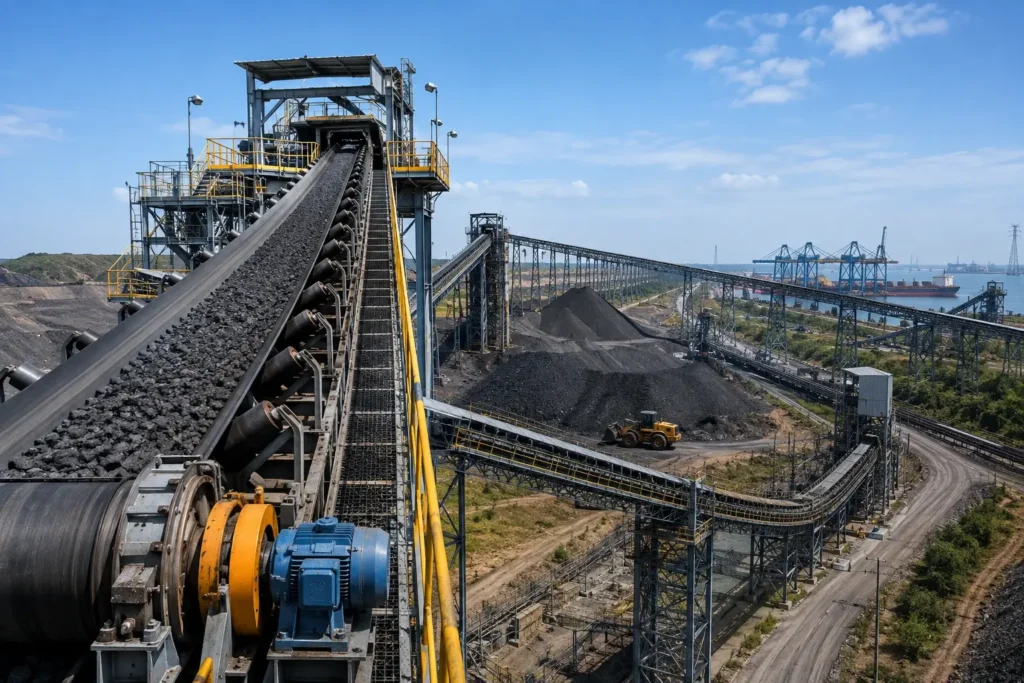

The official Ministry of Coal reports FY2024-25 coal production at 1,047.523 MT, up 4.98%.
The Ministry of Steel reports 153.6 MT crude-steel production during April–February FY2025-26, up 11.2%.
For cement, IBEF reports FY26 production of 491.4 million tonnes, up 8.6% from FY25.
Major ports handled approximately 914.73 million tonnes in FY2025-26, according to
Ministry of Ports, Shipping and Waterways data.
Industry Overview
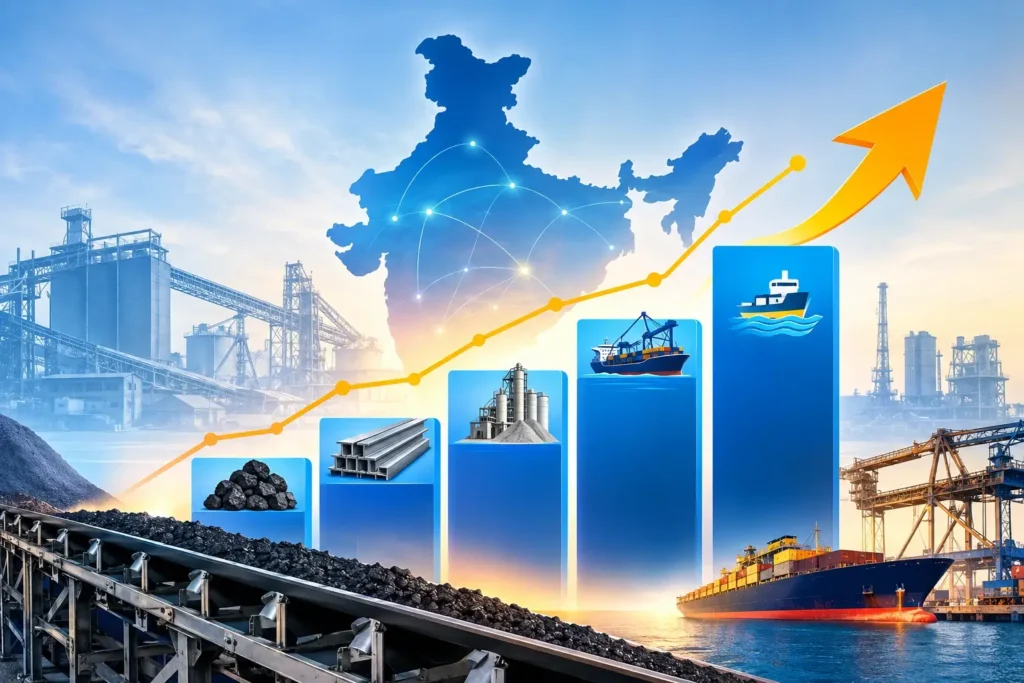
Bulk material handling systems are designed to move large quantities of dry materials efficiently. These systems are used in mines, factories, ports, power plants, cement units,warehouses, and construction sites.Common equipment includes belt conveyors, conveyor pulleys, idlers, feeders, hoppers,crushers, stackers, reclaimers, bucket elevators, screw conveyors, and dust-control systems.
The industry is closely linked to India’s industrial and construction activity. When the country produces more cement, steel, coal, minerals, food grains, and manufactured goods, the need for material handling equipment also rises.
Growth
The Indian bulk material handling industry is expected to maintain steady growth through 2026. The main reasons include:
- Expansion of road-ways, railway lines, ports, airports, and industrial corridors
- Large Growth in cement and steel production
- Increased coal and mineral extraction
- New power generation and renewable energy projects
- Growth in warehouses and logistics sector
- Demand for safer and more automated factories
- Replacement of old and inefficient equipment
Many companies are also investing in equipment that can reduce fuel use, material loss,dust, noise, and maintenance costs.
Major Industries
Bulk material handling equipment is generally used in the following sectors:
- Mining: It is used to transfer coal, iron ore, limestone, bauxite, and other minerals.
- Cement: Limestone handling, clinker movement, coal transport, and finished cement dispatch.
- Steel: Raw material yards, sinter plants, coke plants, blast furnaces, and finished product handling.
- Power: Coal handling, ash handling, biomass handling, and fuel storage.
- Ports: Ship unloading, stockyard management, and loading systems.
- Construction: Sand, aggregates, cement, and crushed stone movement.
- Fertilizers: Storage, blending, bagging, and loading.
- Agriculture and food processing: Grain, pulses, sugar, flour, and animal feed handling.
- Warehousing and logistics: Pallet, package, and bulk product movement.
Growth Drivers
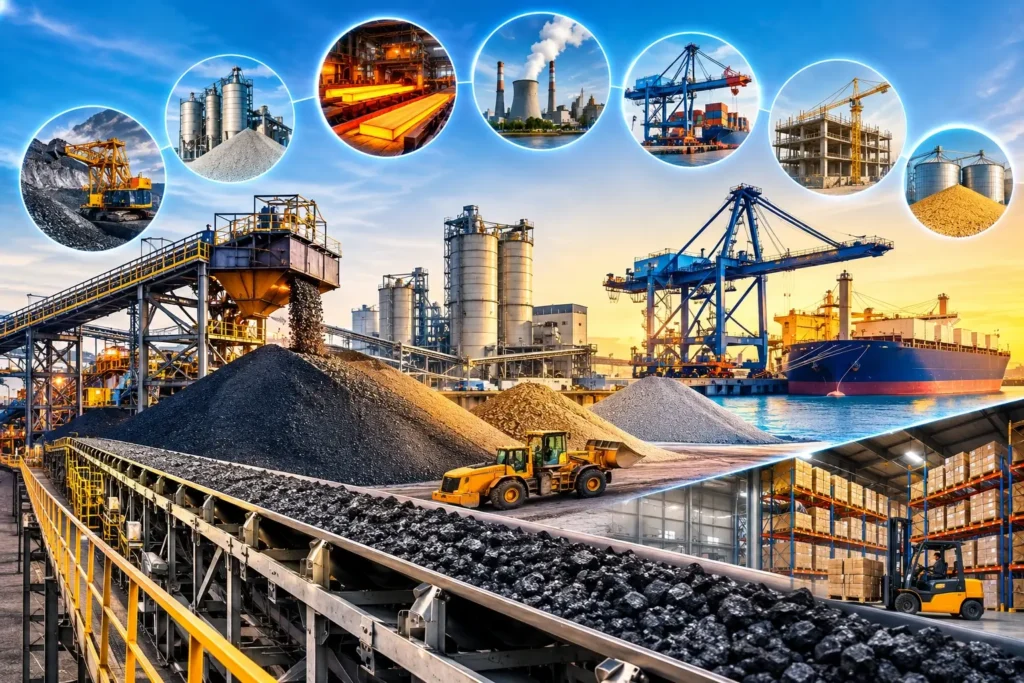
There are several economic and industrial factors supporting the growth of India’s bulk material handling industry.
Infrastructure
India’s infrastructure development is creating demand for materials such as cement, steel,aggregates, coal, and minerals. New highways, railways, ports, industrial parks, airports, and urban construction projects require large volumes of raw materials.
This activity increases the need for efficient systems to:
- Receive raw materials
- Store them safely
- Move them between processing stages
- Load them into trucks, rail wagons, or ships
- Reduce loading and unloading time
Large infrastructure projects also encourage companies to use fixed and mobile material handling systems instead of depending entirely on manual labor and road transport.
Mining/Cement/Steel
Mining, cement, and steel remain the most important users of bulk material handling equipment.In mining, conveyors and feeders are used to move overburden, coal, ore, and waste material. Large systems of transportation can reduce the need for trucks. Also help lower fuel and operating costs.
In cement plant material handling equipment used throughout the production process.Limestone, coal, gypsum, clinker, and cement must be moved between storage and processing areas.Steel plants require equipment for coal, coke, iron ore, limestone, sinter, pellets, scrap and finished steel products. Their handling systems must operate under heavy loads and in tough conditions.
Growth of these industries in turn supports demand for these goods:
- Heavy duty belt conveyors
- High capacity conveyor pulley
- Impact Resistant Idler Puller
- Feeding
- Hoppers
- Chutes
- Crushers
- Stackers and reclaimers
- Dust control equipment systems
Automation
Now-a-days automation is becoming an important part of modern material handling systems.Automated equipment can control material flow, reduce manual intervention and provide better operating performance.
Common automation features include:
- Variable frequency drives (VFD’s)
- Programmable logic controllers
- Remote monitoring system
- Automatic belt tracking system
- Load control sensors
- Weighing systems
- Smart safety switches
- Camera-based inspection
- Automated stockyard management
Automation is especially useful in hazardous areas. It is used in high-temperature plants and dusty locations where continuous operation is required.
Equipment
Bulk material handling equipment is selected according to the material being moved and the operating conditions of the plant. Material weight, moisture, abrasiveness, temperature, size,and flow characteristics all influence equipment selection.
Belt Conveyors
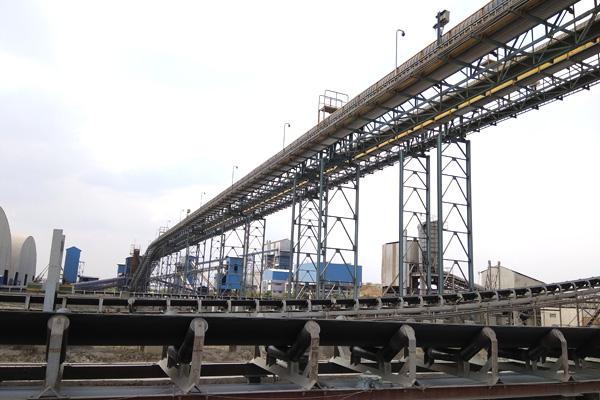
Belt conveyors are mostly used for continuous bulk materials transportation. They can transport materials horizontally, at an incline, or over long distances.
Key benefits include:
- High loading capacity
- Continuous material operation
- Lower operating cost as compared to many truck-based systems
- Flexible layout options
- Suitable for indoor and outdoor use
- Easy connection with crushers, screens, and storage systems
These conveyors are used in mines, ports, cement plants, power stations, and steel plants.Also different designs are available for steep-angle conveying, enclosed conveying,long-distance transport, and material with high temperature or high moisture.
Conveyor Pulleys
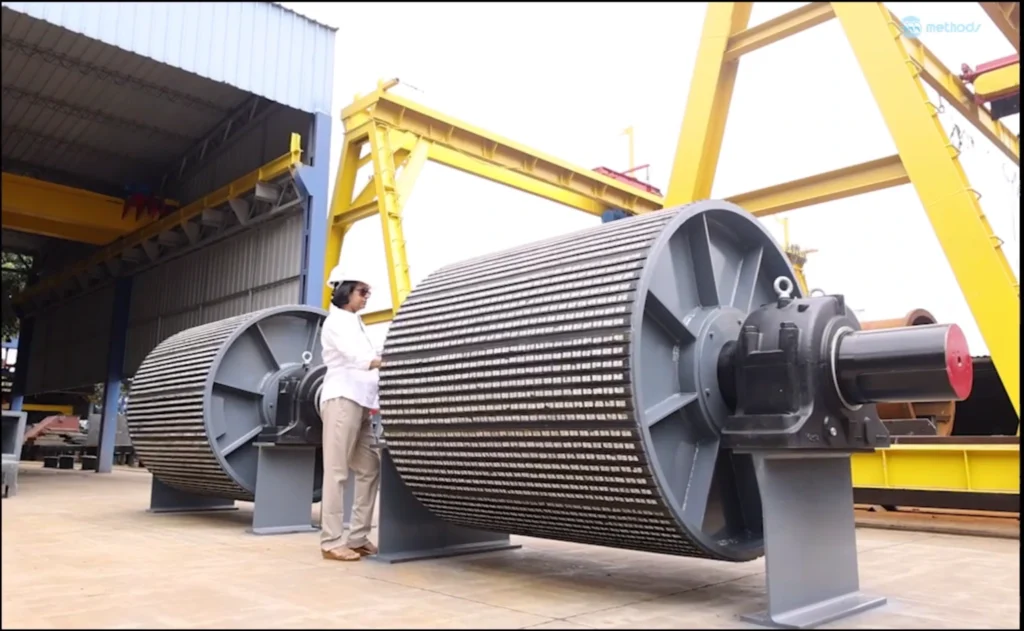
Conveyor pulleys guide and drive the conveyor belt. Important types include:
- Drive pulleys
- Head pulleys
- Tail pulleys
- Bend pulleys
- Snub pulleys
- Take-up pulleys
Pulley performance has a direct effect on belt life and system reliability. Poor pulley design or incorrect alignment can cause belt damage, slippage, vibration, and unplanned shutdowns.
In 2026, customers are showing more interest in:
- Larger size pulleys
- Advanced shaft design
- Better lagging materials
- High-strength welded structures
- Corrosion-resistant coatings
- Easier inspection and replacement system
Idlers
Idlers support the belt and the material load. They help maintain belt shape, reduce friction, and keep the system operating smoothly.
Common types include:
- Carrying idlers
- Return idlers
- Impact idlers
- Training idlers
- Transition idlers
- Self-aligning idlers
Good-quality idlers can reduce energy use, belt wear, noise, and maintenance requirements. In mining and heavy industries, impact idlers are used in loading areas to absorb the force of falling material. Sealed bearings, improved rubber rings, stronger frames, and better balancing are important areas of product development.
Feeders & Hoppers
Feeders control the flow of bulk material from one point to another. Hoppers store material temporarily and discharge it at a controlled rate.
Common feeder types include:
- Apron feeders
- Belt feeders
- Vibrating feeders
- Screw feeders
- Rotary feeders
- Weigh feeders
Feeders and hoppers are used below crushers, bins, silos, stockpiles, and storage systems. Their design must prevent blockages, uncontrolled discharge, segregation, and excessive dust. Demand is growing for feeders with better flow control, higher wear resistance, load measurement, and automated speed adjustment.
Trends 2026
The Indian manufacturing industry is moving toward equipment which is more connected,efficient, and reliable. The main trends in 2026 are focused on automation systems, higher loading capacity, energy savings, and preventive maintenance.
Automation
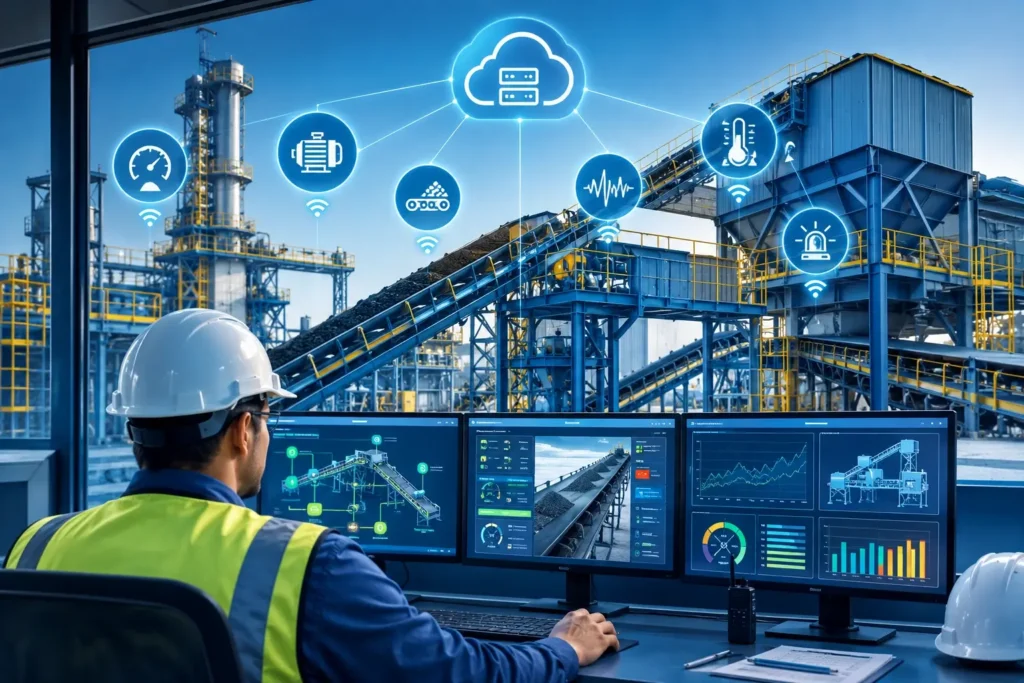
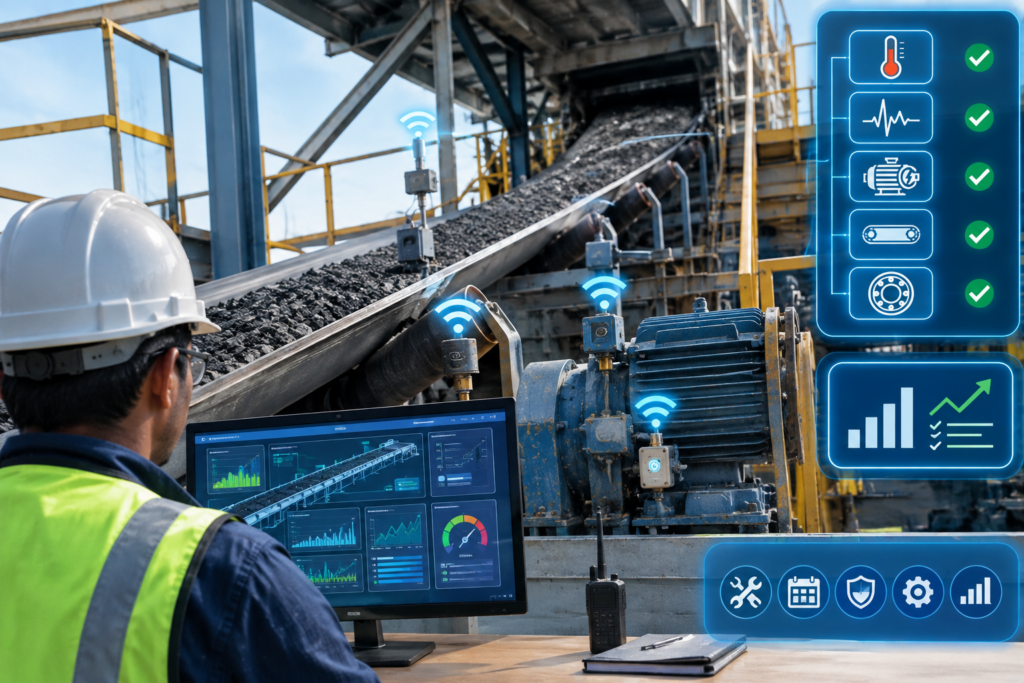
More plants are connecting conveyors and other equipment to centralized control systems. Operators can monitor belt speed, motor load, material flow, temperature, vibration, and emergency-stop status from a control room.Automated systems can also adjust equipment speed according to the material flow. This can reduce empty running, power consumption, and equipment wear.
Digital records help plant managers compare performance and identify repeated problems.
High-Capacity Systems
Mining, ports, cement plants, and power projects are demanding systems that can handle larger volumes of material. High-capacity conveyors reduce the number of transfer points and can lower the need for truck movement.
Large systems require careful attention to:
- Belt strength
- Pulley design
- Drive selection
- Structural support
- Transfer chutes
- Belt cleaning
- Dust control
- Emergency protection
- Maintenance access
Long-distance and overland conveyors are also becoming more attractive where they can reduce fuel use and traffic inside industrial sites.
Predictive Maintenance
Predictive maintenance uses equipment data to identify possible failures before they stop production. Sensors can track vibration, temperature, motor current, belt condition, and bearing performance.
The benefits include:
- Fewer unexpected breakdowns
- Better spare-parts planning
- Longer equipment life
- Lower repair costs
- Improved safety
- Reduced production losses
Predictive maintenance is especially useful for drive units, bearings, pulleys, gearboxes,motors, and conveyor belts.
Challenges
The industry faces several challenges despite its growth.
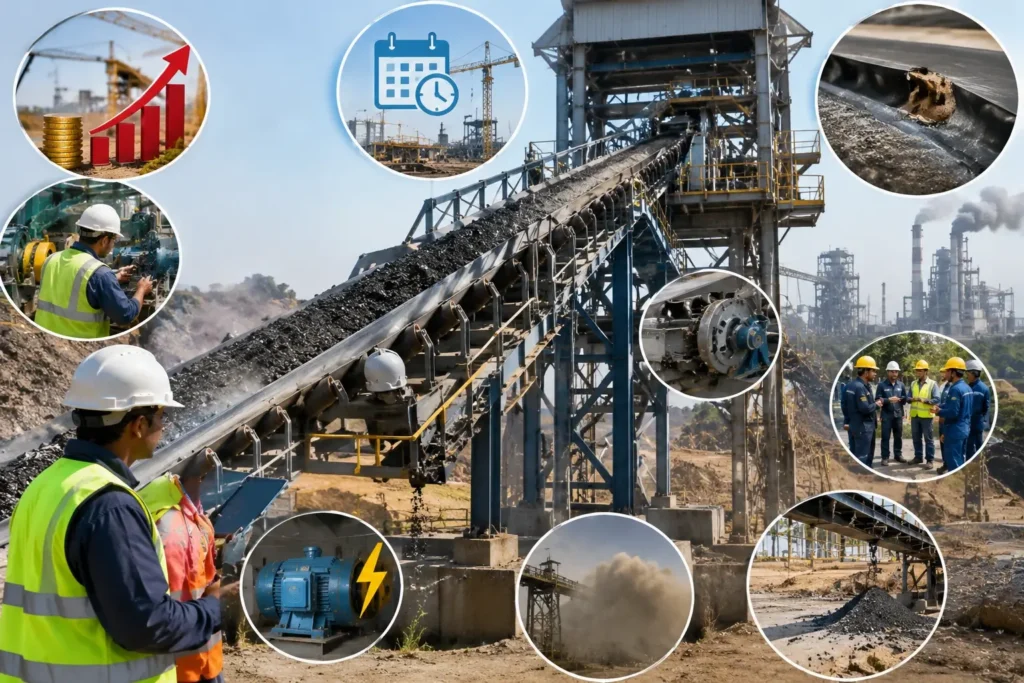
High initial investment:Engineering, equipment, civil work, installation and commissioning of large material handling systems all require large expenditures.
Project delays: Land approvals, environmental permissions, supply issues and construction delays can impact project timelines.
Maintenance difficulties: Dust, moisture, abrasion, vibration and heavy loads can all damage equipment. Without proper maintenance, you risk belt failure, material spillage and unplanned shutdowns.
Skilled labor shortage: Companies need engineers and technicians who know mechanical systems, electrical controls, automation and safety practices.
Quality concerns: Low-quality components may reduce the life of the complete system. Customers are therefore paying more attention to testing, certification, warranty support, and service availability.
Energy use: Large conveyors and processing systems can consume substantial power. Companies are looking for efficient motors, variable speed drives, regenerative systems, and improved equipment design.
Environmental requirements: Dust, noise, spillage, and emissions must be controlled,particularly in mining, cement, power, and port operations.
Future Outlook
India’s bulk material handling industry is expected to grow alongside mining, manufacturing,
construction, logistics, energy, and infrastructure development.
Future demand will likely focus on:
- Energy-efficient conveyor systems
- Automated material flow control
- Smart sensors and remote monitoring
- High-capacity mining conveyors
- Enclosed and dust-controlled systems
- Mobile crushing and conveying
- Modern stockyard equipment
- Digital maintenance platforms
- Replacement parts and plant upgrades
- Locally manufactured components
Companies that combine reliable equipment with installation, maintenance, automation, and after-sales support are likely to remain competitive. The market will also move toward complete solutions rather than individual machines. Customers increasingly want one supplier to handle design, equipment selection, installation, testing, automation, and maintenance.