
Methods India

Pipe Conveyor vs Belt Conveyor: Which Is Better for Bulk Material Handling?

If you work in mining, cement, power, ports, or any industry that moves bulk materials, you know one thing for sure. It is transporting material safely and cheaply makes or breaks your operation. Two machines dominate this space: the traditional belt conveyor and the modern pipe conveyor. Both do the same basic job. Also,both are used to moving material from point A to point B. But they go about it very differently, and picking the wrong one can cost you money for years.

So which one works better for a material handling system? Honestly, there’s no single answer. It depends on your material, your site layout, and your budget. Let’s break it down in plain terms.

First, a Quick Look at Both

What Is a Conventional Belt Conveyor?

A belt conveyor is what most people narrate when they heard about the word “conveyor.” A flat rubber belt runs over rollers called idlers. The idlers are slightly angled so the belt forms a shallow trough that holds the material. The load travels openly on top of the belt until it reaches the discharge end.

It’s simple design, proven technology that has been around for over a century.
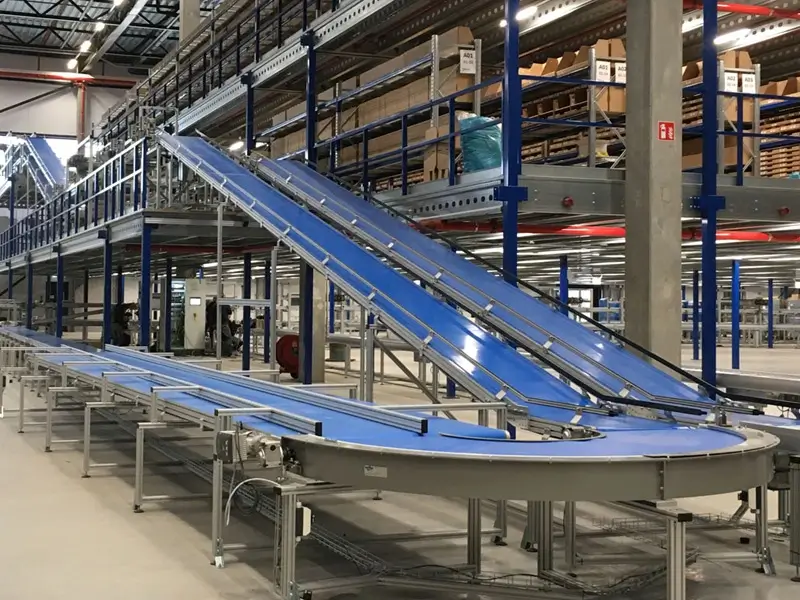
Belt Conveyor

What Is a Pipe Conveyor?

A pipe conveyor looks similar at the loading and discharge ends. But here’s the twist —along the main stretch, special idlers arranged in a ring shape fold the belt edges upward and over the material, closing it into a round tube. Think of it as wrapping the load completely inside the belt.

At the discharge point, the belt opens up flat again and releases the material. Then it rolls back as a pipe on the return side too.
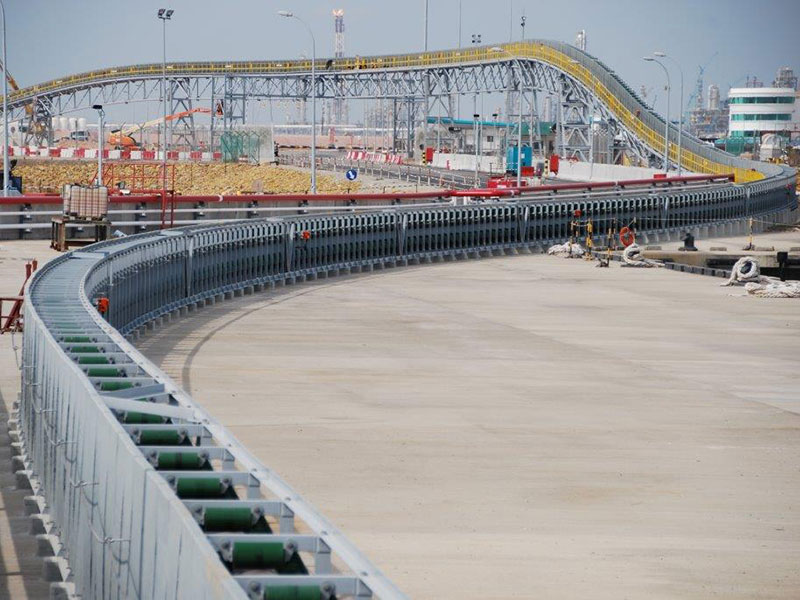
Pipe Conveyor

Where Belt Conveyors Shine?

Lower Cost

This is the biggest advantage. Belt conveyors are affordable to buy, install, and run. If the budget is tight, they’re hard to beat.

Simple Maintenance

Anyone familiar with conveyors can maintain an open belt. Idlers, pulleys, and scrapers are easy to reach, inspect, and replace. Spare parts are available almost everywhere.

Higher Capacity

For the same belt width and speed, a troughed belt carries more material than a pipe conveyor. If you need to move large volumes of material quickly, an open belt conveyor is the best option.

Less Power Consumption

Because the belt stays flat and open, friction losses are lower. Over a long life, that adds up to real savings on electricity.

Easy Cleaning and Inspection

You can see everything. Spillages, wear, and damage are spotted immediately and fixed fast.
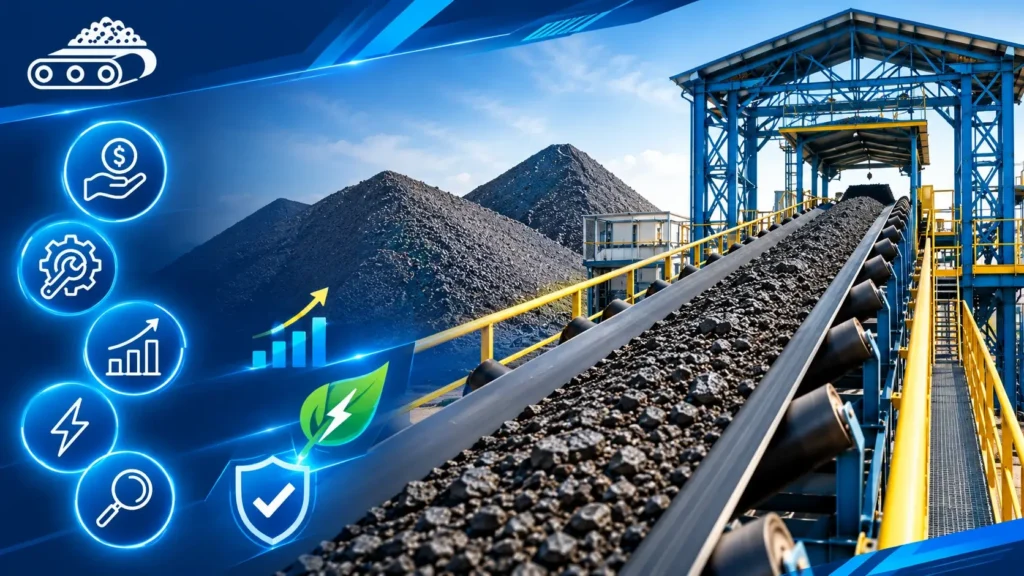
 Feature of Belt Conveyor

Where Pipe Conveyors Shine?

Zero Dust and Zero Spillage

This is the pipe conveyor’s superpower. The material is sealed inside the tube , so nothing can escape . That means cleaner air, no product loss along the route and no cleanup crews chasing mess under the line.

Full Weather Protection

Rain, wind, sun, snow — none of it touches your material. Coal stays dry, cement powder doesn’t blow away, and grains don’t get soaked.

It Can Turn Corners

This is something that a regular belt just can’t do. A pipe conveyor bends horizontally and vertically while transporting material. It can snake around buildings, hills, rivers and roads instead of needing a perfectly straight path.

Smaller Footprint

Since it follows curves, a pipe conveyor often avoids land acquisition problems. You can route it along existing corridors, which saves money on land and permissions.

Eco-Friendly Image

Many countries now have strict rules on airborne dust near residential areas. Pipe conveyors help plants meet environmental norms without building expensive covered galleries.
Feature of Pipe Conveyor


The Honest Drawbacks

Belt Conveyor Weaknesses:

  • Dust and spillage are constant headaches
  • Material gets exposed to weather unless you build covers
  • Needs a mostly straight alignment
  • Wind can blow away light, fine material

Pipe Conveyor Weaknesses:

  • Costs noticeably more upfront
  • Uses more power due to extra belt folding and friction
  • Runs slower, so throughput per belt width is lower
  • Damage inside the tube is hidden and harder to detect
  • Belt repairs and replacement are trickier and need skilled teams
Factor
Belt Conveyor
Pipe Conveyor
Initial cost
Lower
20–40% higher
Power use
Lower
Higher
Capacity
Higher
Moderate
Dust control
Poor
Excellent
Curved routes
Not possible
Easily handled
Maintenance
Simple
More complex
Weather protection
Needs covers
Built-in
Best distance
Short to long
Medium to long

So, Which One Should You Choose?

Go with a belt conveyor when:

  • Your route is fairly straight
  • The material isn’t dusty or hazardous
  • Budget and power savings matter most
  • You’re moving very large volumes
  • The conveyor runs indoors or inside covered galleries anyway

Choose a pipe conveyor when:

  • You’re handling coal, fly ash, cement, or other dusty material
  • Environmental regulations are strict in your area
  • The route has curves, obstacles, or rough terrain
  • The conveyor passes through populated or sensitive zones
  • Material quality matters and exposure would cause losses

A quick real-world note: many modern cement and power plants actually use both. They use open belts indoors where dust control is easier, and switch to pipe conveyors for outdoor stretches that pass through towns or forests.

The Bottom Line

There is no clear winner here. The traditional belt conveyor is still appropriate for low-cost,high-volume, simple transport material transport. When it comes to cleanliness, safety and route flexibility out-weight pure economics, the pipe conveyor is the smarter choice.

WordPress Video Lightbox