Methods India

Belt Conveyors

Belt Conveyors Manufacturer in India

Moving materials through a facility sounds simple enough. But anyone who’s managed a bulk handling operation knows how quickly it becomes complicated — bottlenecks, spillage, manual handling risks, and equipment that wasn’t built for your specific material or layout. Belt conveyors solve a lot of those problems quietly and reliably, which is why they’ve become a staple in industries that can’t afford to slow down.

At Methods India, we’ve spent over four decades building conveyor systems for exactly these situations. Not off-the-shelf solutions, but systems designed around what you’re actually handling — whether that’s coal, limestone, iron ore, gypsum, bagasse, aggregates, or something else entirely. Before any engineering begins, we sit down to understand your material, your site, your throughput targets, and your constraints. The conveyor we design for you should fit your operation, not the other way around.

Heavy Duty Belt Conveyor

What Are Belt Conveyors?

A belt conveyor does one job — it moves material from point A to point B. A continuous belt runs over two pulleys, with rollers spaced along the underside to carry the weight. Material goes on at one end and comes off at the other. The belt material varies by application. Rubber handles heavy or abrasive loads. PVC suits lighter, cleaner materials. Woven fabric is used where flexibility matters more than toughness.

Belt conveyors take different forms depending on what the application demands. Some run flat across a plant floor. Others climb at an angle between process levels. In environments where dust or spillage is a real concern, enclosed pipe conveyors system keep everything contained. What actually determines how well a conveyor performs comes down to the components and how they’re specified together. The drive and tail pulleys keep the belt moving. Idlers carry the load across the full length of the run. Take-up units hold the belt at the right tension so it doesn’t slip or sag. Belt cleaners stop material from sticking to the return side and building up over time. And the steel structure ties everything together.

Why Choose Methods India for Belt Conveyors?

Most people focus on specs and price when evaluating conveyor manufacturers. That’s fair — but it only tells part of the story. What you don’t see on a datasheet is whether the manufacturer will still be engaged six months after installation, whether their engineers genuinely understand your material and process, or whether support calls actually get answered.

That’s the kind of thing you find out the hard way — or you look for a company that’s already proven it over decades of work in the field. Methods India is a leading belt conveyor manufacturer in India offering custom solutions for bulk material handling.

40+ Years of Industry Experience

We've been in the bulk material handling industry for over four decades. That kind of tenure means we've seen most scenarios before — & we know how to engineer around the tricky ones. It also means you're getting advice from people who genuinely understand what happens on industrial floors, not just in design software.

In-House Design and Engineering

Every stage of your project — from initial concept through to commissioning — is handled by our own team under one roof. We don't subcontract out critical steps. That means tighter quality control, clearer communication, and timelines that don't slip because of a third party.

Solutions Built Around Your Operation

No two plants are the same, and we don't pretend otherwise. Your material has specific characteristics. Your site has specific constraints. Your throughput targets are yours. We factor all of that in before a single drawing is made, so what you receive is a system that was designed for your situation.

Quality That Holds Up in Demanding Conditions

Our conveyors are built with high-grade steel structures, abrasion-resistant belting, and precision-engineered rollers. These aren't components chosen to hit a price point — they're chosen because they last in heavy industrial use, where downtime has a real cost.

Support That Stays With You

Our after-sales network covers the country, so whether you need routine maintenance support or faster intervention when something's not right, someone from our team is reachable. Commissioning isn't where our involvement ends — it's where the ongoing relationship begins.

International Standards Compliance

Every system we build is designed and manufactured to comply with internationally recognised safety and quality standards. Whether you're running a domestic plant or operating to global benchmarks, our conveyors are built to meet that bar.

Types of Belt Conveyors We Offer

We manufacture a full range of belt conveyor types, each suited to different operational requirements. Here’s a breakdown of what we offer and where each type fits best:

Troughed Belt Conveyors

The workhorse of bulk material handling. The trough shape keeps material centred on the belt, cutting down on spillage and making it practical for long-distance, high-volume transport. If you’re moving large quantities of material consistently across your plant, this is likely your starting point.

Inclined Belt Conveyors

When material needs to move between different elevations — between process levels, from ground to storage, or up to a loading point — inclined conveyors handle the vertical component. Anti-rollback systems and cleated belt options are available for steeper angles where material retention is a concern.

Shuttle Belt Conveyors

When material needs to move between different elevations — between process levels, from ground to storage, or up to a loading point — inclined conveyors handle the vertical component. Anti-rollback systems and cleated belt options are available for steeper angles where material retention is a concern.

Portable Belt Conveyors

Not every operation is permanent. For construction sites, seasonal work, or short-term projects where the handling setup needs to move with the job, portable conveyors are designed to be repositioned quickly without a major setup effort.

Reversible Belt Conveyors

Sometimes the ability to discharge in either direction from a single unit removes the need for additional equipment entirely. Reversible conveyors run the belt both ways, giving you flexibility in how material is distributed across your facility.

Cross Country Belt Conveyors

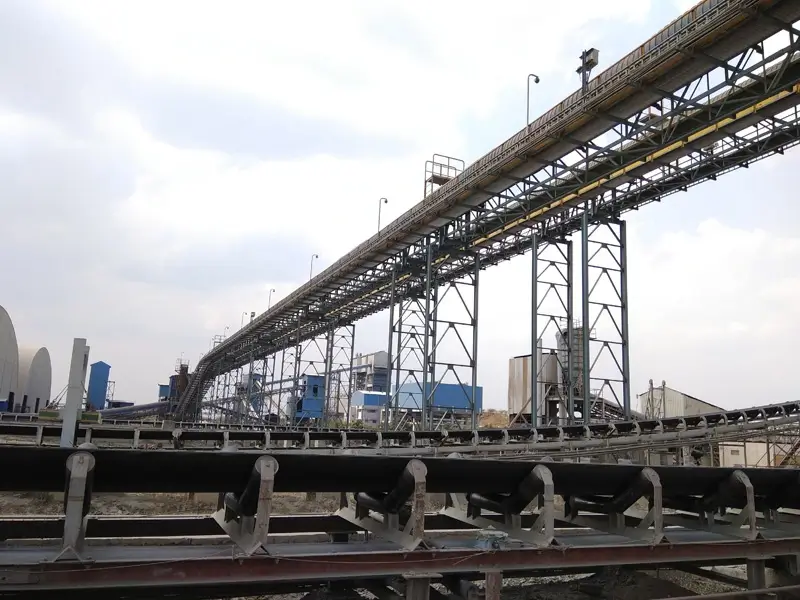
In mining, cement, and power industries, materials often need to travel several kilometres across terrain that’s far from flat. Cross country conveyors are engineered for exactly these scenarios — built to traverse challenging landscapes with minimal infrastructure and maximum reliability.

Industries We Serve

Belt conveyor systems aren’t built for just one kind of work. They show up wherever bulk materials need to move — reliably, without stopping, and often under conditions that would wear down lesser equipment. Get the conveyor right, and the whole operation flows. Get it wrong, and production feels it almost immediately.

We’ve put our systems to work in some of the toughest environments out there, and they’ve held up.

Cement Plants

Cement production is hard on everything — the materials are abrasive, the distances are long, and the dust never really goes away. From the time limestone is pulled out of the quarry all the way through to clinker processing and dispatch, there’s a constant need to keep raw materials moving from one stage to the next.

Mining Operations

Ore doesn’t move itself. Whether it’s coal coming out of an underground shaft or minerals crossing a vast open-pit site, our conveyors take over the heavy lifting — covering long distances with the kind of load capacity that manual handling simply can’t match.

Power Plants

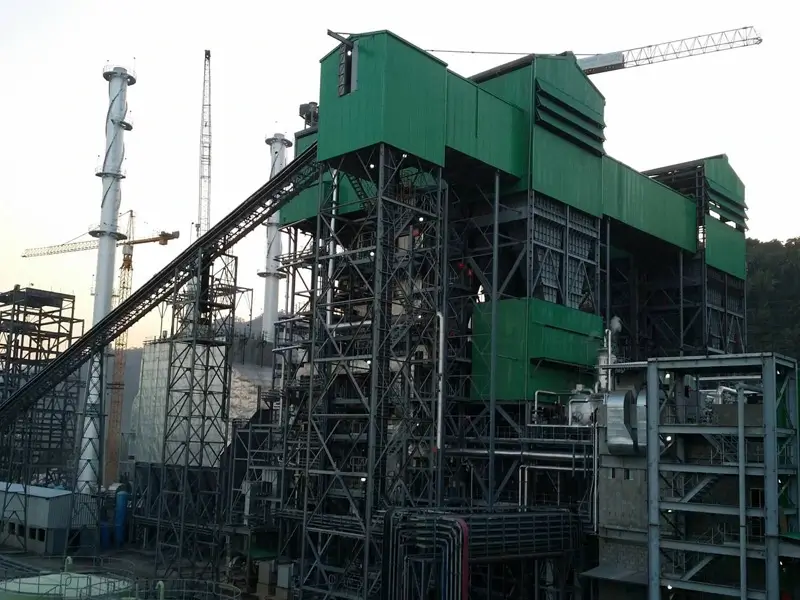
A power plant runs on fuel — and the moment that fuel stops moving, everything downstream feels it. There’s no buffer large enough to cover a conveyor failure when boilers are running at full demand. Coal and biomass need to travel from the storage yard to the boiler consistently, in the right volumes, at the right times.

Our conveyors are built around that reality. No dramatic engineering claims — just systems that show up every shift, move the fuel that needs moving, and keep generation running without interruption.

Steel Industries

Steel doesn’t get made in one step. It’s a sequence — each stage dependent on the one before it — and the raw materials feeding that sequence have to arrive on time, every time. Iron ore, coke, flux — if any of it backs up or falls short, the whole line feels it.

What our conveyors bring to a steel plant is straightforward: dependable, consistent material flow across every shift. Not just when conditions are ideal, but through the heat, the dust, and the pressure of continuous production.

Port & Terminals

A ship at berth is a clock running. Demurrage costs money. Delays back up schedules. And bulk cargo — by its very nature — doesn’t move in small, manageable quantities. It moves in volume, and it needs to move fast.

Our conveyors connect vessels to storage yards and onward to transport links, handling the kind of throughput that port operations demand. The goal is always the same: faster turnaround, tighter schedules, and an operation that stays competitive because it doesn’t lose time at the transfer point.

Fertilizer Plants

 Granules, powders, blended compounds — fertilizer materials come in many forms, and each one demands careful handling. Our conveyors move product through production and packaging lines without spillage or degradation.

Sugar Industries

Sugarcane is bulky and fibrous; refined sugar is fine and delicate. Our systems are designed to handle both ends of the spectrum, moving material gently but efficiently through every stage of processing.

Aggregate Processing Plants

Crushed stone, gravel, sand — the output of every screen and crusher needs to get somewhere fast. Our conveyors connect each stage of the operation, keeping material flowing between processing points and stockpile areas.

Benefits of Belt Conveyors

A belt conveyor isn’t just equipment you install and forget about. Everything right, it becomes one of the most dependable parts of your entire operation — quietly handling the work that keeps everything else moving. Here’s what that actually looks like in practice

Continuous and Automated Material Transportation

Production doesn’t pause, and neither do our conveyors. Once running, they move material steadily through your process without needing someone to supervise every step. There’s no shift change that slows the line, no manual handoff that creates a gap. The material moves, the process continues, and your operation stays on schedule.

Reduced Labour Requirements

When a conveyor takes over the movement of bulk materials, your team gets freed up for work that actually needs human judgment. The routine, physically demanding job of shifting material from one point to another gets handled automatically — which means lower workforce costs and a better use of the people you have.

Lower Operating Costs

Over time, the numbers tell the story. Energy-efficient motors, low maintenance demands, and a long working life add up to a cost-per-tonne that’s hard to beat through any other handling method. The initial investment pays itself back — and then keeps paying.

High Reliability and Uptime

Industrial environments are tough on equipment. Heat, dust, heavy loads, and continuous use will expose any weakness in a system fairly quickly. Our conveyors are built to hold up under those conditions — solid components, robust construction, and engineering that prioritises consistent performance over flashy specs. Fewer breakdowns means fewer surprises in your production schedule.

Improved Workplace Safety

Manual material handling carries real risk — strain injuries, accidents, fatigue. Replacing that with an automated conveyor system removes a significant chunk of that risk from your workplace. On top of that, built-in features like emergency stops, belt-slip detection, and protective guarding add another layer of protection for the people working around the system every day.

Increased Productivity

A consistent material flow lifts the whole operation. When material arrives at each stage on time and in the right volumes, bottlenecks disappear and throughput goes up. It’s not complicated — remove the handling delays and the production line simply runs better.

Reduced Material Spillage

Spillage is waste — lost material, extra cleanup, and added cost. Our conveyor systems are designed to keep material where it belongs from start to finish. Troughed belt profiles, properly fitted skirting, and correct belt tensioning all work together to keep the load contained and the floor clean.

Energy-Efficient Operation

Running a facility is expensive, and energy is one of the biggest ongoing costs. Our conveyors use IE3-rated motors paired with variable frequency drives, which means they draw only the power the task actually requires. Less energy consumed means lower utility bills every month — and a smaller environmental footprint over the life of the system.

FAQs

What materials can be transported using belt conveyors?

Coal, clinker, limestone, iron ore, aggregates, bagasse, fertilizers, and various bulk materials.

Capacity depends on belt width, speed, and material characteristics. Custom solutions are available.

Yes, inclined belt conveyors are designed for vertical elevation changes.

Yes, all conveyor systems are engineered according to customer requirements.

Yes, Methods India offers complete turnkey conveyor solutions from design to commissioning.

WordPress Video Lightbox